
Contacts
Area Details
Pushmataha WMA covers 19,247 acres of northern Pushmataha County in the southeastern part of Oklahoma. Located approximately five miles south of Clayton, Pushmataha WMA is on the western fringe of the Ouachita mountain range and is comprised of a mixture of oak/pine forest and oak/pine savannahs with steep slopes, shallow soils, and rocky terrain.
In areas where the canopy has been released, all four major prairie grasses exist with numerous forbs and native legumes. There have been over 650 varieties of native plants identified on the area. Some of the native tree species you will encounter are shortleaf pine, post oak, red oak, black oak, hickory, elm, blackgum, sweetgum, rusty blackhaw, flowering dogwood, and hawthorne. You will also encounter high bush huckleberry, low bush huckleberry, different varieties of sumac, coralberry, poison ivy, green brier, blackberry, and many others. The average annual precipitation for the area is about 52 inches.
Going Quail Hunting?
During quail hunting season, wing collection boxes are placed at several wildlife management areas: Beaver River, Optima, Packsaddle, Cooper, Kaw, Drummond Flats, Canton, Fort Supply, Cross Timbers, and Pushmataha. Hunters are asked to donate a wing from each quail they harvest for research purposes. Ultimately, the wings can help determine the status of the quail populations at the WMAs and can offer clues about how next year’s season might pan out.
From Clayton: From the intersection of State Hwy 2 and U.S. Hwy 271, 1.8 miles south on U.S. Hwy 271 (look for 4x8 ft. WMA sign), ½ mile west on Game Refuge Road, sign at the “T” in the road directs WMA visitors to the south (left), 3 miles to headquarters.
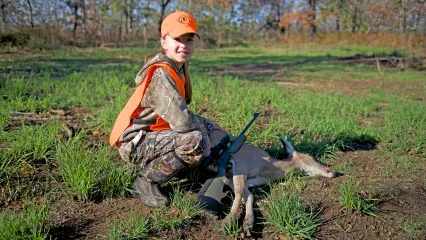
- Deer: White-tailed deer exist in good numbers but are heavily sought after.
- Quail: Bobwhite quail are present in fair numbers.
- Turkey: Eastern wild turkeys are present in fair numbers but are heavily sought after.
- Rabbit: Cottontails are present but not usually in large numbers.
- Furbearers: Coyote, bobcat, opossum, skunk, and raccoon are available.
- Dove: Occur for short periods of time during their annual migration.
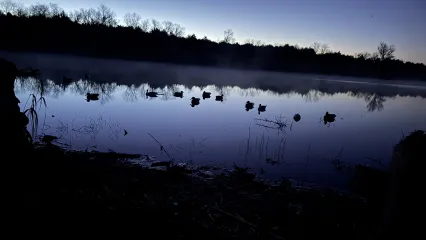
- Waterfowl: A few wood ducks and mallards may be found on the ponds and on Caney Creek.
- Woodcock: Occurs in relatively low numbers.
- Squirrel: Fox and gray squirrels are usually present in good numbers.
- Bear: Low population of black bears.
- Bachman’s Sparrow: Present on the WMA.
- Brown Creeper: Present, but only in very low numbers.
- Owls: Several species of owls may be observed in the area. The Screech Owl is a favorite.
- Eastern Wood-Pewee: This is also a favorite of bird-watching enthusiasts.
- Reptiles & Amphibians
Timber stand improvements within the mixed oak/pine forest are progressing and maintained with an aggressive prescribed burning regime. Management efforts focus on producing native wildlife foods such as ragweed and sunflower and maintaining the woody structure height for a variety of wildlife species.
In 1982, one of the longest-running research projects regarding vegetation response to fire frequency was initiated and continues in the area today. Tours of the research area are available by appointment to interested landowners, organizations, agencies, clubs, associations, and other interested groups and individuals.
Two designated primitive camping areas are offered in the area, while both lodging and restaurants are available in Clayton. The Clayton Chamber of Commerce can be reached at (918) 569-4776. Clayton Lake State Park is located on the east side of the area, also other RV parks and hook-ups are available in the surrounding area.
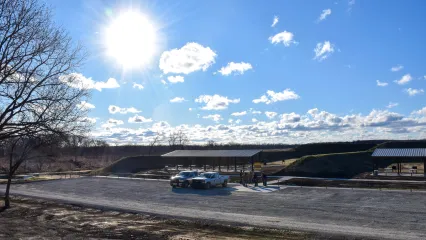
Three shooting ranges are available to anyone who possesses a current hunting license. The rifle range offers 25, 50, 100, and 200 yard target frames. A pistol range is available as well as a place to set up a trap and do some trap shooting. No target shooting is allowed in the area except at the designated shooting ranges.

Warning: Use of Range is Prohibited During All Phases of Construction
Features will include: Renovation and repair of the berms at both the pistol and rifle ranges. As well as repairing sidewalks and installing 2 covered shooting benches at the pistol range.
Coordinates: 34°32'25.56"N 95°20'46.88"W
Driving Directions: From Clayton, travel south out of town on US-271 S for 1.6 miles. Turn South onto Co Rd 4320. After 1 mile continue onto Co Rd 4289 and the rifle range will be on the East side of the road.
Be sure to review Department-Managed Area Rules on shooting ranges before use.
Fishing opportunities exist at Sardis Lake on the north side of Clayton, Clayton Lake on the east side of Clayton, the Kiamichi river, Little river, Blackfork river and numerous mountain streams in the surrounding area. Wister lake is east of the area in Leflore county, Eufaula lake is northwest, Robbers Cave State Park has a wintertime trout fishing season north of Wilburton on Hwy. 2. Broken Bow lake is in McCurtain county, with good trout fishing opportunities on the Lower Mountain Fork River, Pine Creek lake is southeast of the area on Hwy. 3 & 7 and Hugo lake is south. All of these lakes offer good opportunities for black bass, crappie and catfish. The streams in the area are at times floatable with canoe in the spring and offer great opportunities for smallmouth bass and sunfish.
Area closed to all activities for controlled deer and turkey hunts:
Oct. 16-18, 2026
Nov. 13-15, 2026
Dec. 11-13, 2026
Apr. 3-4, 2027
Closed Seasons
Same As Statewide Seasons
Seasons w/ Special Restrictions
- Quail
Closed during the first nine days of deer gun season.
- Rail, Gallinule, Crow, Snipe, Woodcock, Duck, Merganser and Coot, Rabbit, Squirrel
Closed from the opening day of deer archery season through the first nine days of deer gun season.
- Pursuit with Hounds for Furbearers, Predator/Furbearer Calling
Closed from the opening day of deer archery season through the first nine days of deer gun season and closed during spring turkey season.
- Turkey Spring, Youth Turkey Spring
One-tom limit; seasons combined.
Closed to all nonhunting activities, except hunter camping, from Oct. 1 - Jan. 31 and during spring turkey season.
Hunter and angler camping is allowed in designated areas.
Kiamichi Country Tourism
1-800-722-8180
Clayton
PO Box 279, Dept KC03
Clayton 74536
(918) 569-4135
Oklahoma Tourism and Recreation Department
Post Office Box 52002
Oklahoma City, OK 73152-2002
(800) 652-6552 or (405) 521-2409
www.travelok.com
Pushmataha County Chamber of Commerce
212 North High Antlers OK 74523
(580) 298-2488
Talihina Chamber of Commerce and Ouachita National Forest Interpretive Association
900 Second St, Suite 12, Dept 03,
Talihina, OK 74571
(918) 567-3434
www.talihinacc.com
vera@talihinacc.com
Q: Is Pushmataha open for deer gun or muzzleloader season?
A: No, Pushmataha WMA is Archery hunting only, closed during control hunts.