Attention Non-Residents
The Oklahoma Wildlife Conservation Commission adopted new rules in 2025 that require non-residents accessing certain Oklahoma public hunting and fishing areas to check in and out of the area. By checking in and out of these areas, hunters, anglers, shooters, birdwatchers, hikers and any other users can help the Wildlife Department better understand how the area is being used. There is no additional cost associated with checking in or out of an area. There is no limit to the number of check ins for an individual in a year.

Contacts
Area Details
Black Kettle WMA covers 30,710 acres near the town of Cheyenne in Roger Mills County. Located in the mixed grass prairie, it is a mixture of rolling sand hills, red shale hills, and wooded bottoms.
Upland sites are vegetated with mixed grass species including big bluestem, indian grass, little bluestem, side-oats grama, and buffalo grass and brush species like shinnery oak, sagebrush, and sand plum. The red shale hills are dominated by shortgrass, sagebrush, and occasional mesquite trees. The wooded bottoms are dominated by cottonwood, elm, and hackberry trees. The average annual precipitation for the area is about 24 inches.
Black Kettle National Grassland is owned by the U.S. Forest Service. For non-hunting information contact Black Kettle National Grassland, (580) 497-2143.
Near Cheyenne: There are approximately 100 units scattered throughout the area, consult map for specific unit locations. The U.S. Forest Service Administrative Office is west of town on State Hwy 47: (580)-497-2143.
- Quail: Bobwhite quail are usually present in good numbers, but are highly sought after.
- Deer: White-tailed deer are present in fair numbers.
- Turkey: Rio Grande wild turkeys are usually present in good numbers, but are highly sought after.
- Rabbit: Mostly cottontails, but an occasional jackrabbit may be found.
- Furbearers: Coyote, bobcat and raccoon are available.
- Dove: Dove are usually present in good numbers during peak migrations.
- Waterfowl: Present in low numbers and limited to upper part of recreation lakes, two wetland development areas, and ponds.
Management efforts focus on producing native wildlife foods such as ragweed and sunflower, although some small agricultural food plots are planted annually. Wildlife water is made available on most units.
Primitive camping is allowed on entire WMA in accordance with US Forest Service, Black Kettle National Grassland regulations. Three developed camping areas are also available including Skipout, Spring Creek, and Black Kettle; no RV hookups available. Lodging and restaurants are available in Cheyenne.
No shooting range available.
Fishing opportunities exist at Spring Creek Lake (60 acres), Skipout Lake (60 acres), Black Kettle Lake (80 acres), and several small ponds.
Same As Statewide Seasons
Seasons w/ Special Restrictions
- Deer Gun
Open the first nine days only.
- Crow, Snipe, Woodcock, Duck, Merganser and Coot, Sandhill Cranes, Rail, Gallinule, Rabbit, Squirrel, Pursuit with Hounds for Furbearers, Predator/Furbearer Calling
Closed during the first nine days of deer gun season.
- Turkey Fall Gun
Shotgun only.
- Trapping
Open to water sets, live box traps and enclosed trigger traps only through Jan 31. Open same as statewide Feb 1 through end of February.
- Turkey Spring, Youth Turkey Spring
Hunting hours close at 7:00 p.m. daily. One-tom limit, seasons combined.
- Quail
Closed during the first nine days of deer gun season. Closed to non-resident hunting February 1-15.
Skipout, Spring Creek and Black Kettle recreation areas are closed to hunting.
OHV (Off-Highway Vehicle) use is regulated by the U.S. Forest Service.
Camping is allowed in accordance with U.S. Forest Service regulations.
Channel and/or blue catfish: six combined per day.
Prohibited methods: trotlines, throwlines, limblines, yo-yos, juglines.
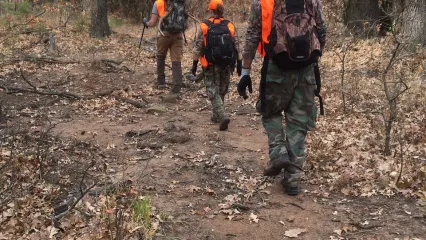
Apprentice Designation: A Learner's Permit for Hunting
Hunter education has greatly reduced hunting accidents, but if you can’t complete a course right away, the apprentice designation allows you to hunt under supervision. It works like a learner’s permit, giving you the chance to gain real experience safely until you finish hunter education.
Exploring the New Herron Family WMA
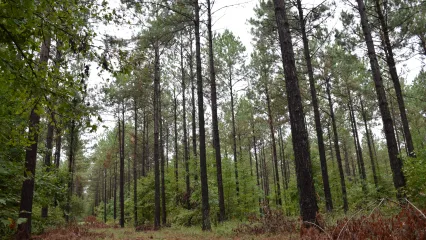
The new Herron Family WMA is more than 17,000 acres of hunting land, it is also adventure, access, conservation, and tradition. Thanks to a unique partnership, Oklahoma residents now have a new place to chase deer, call turkeys, hear quail, and pass on the outdoors to the next generation.