

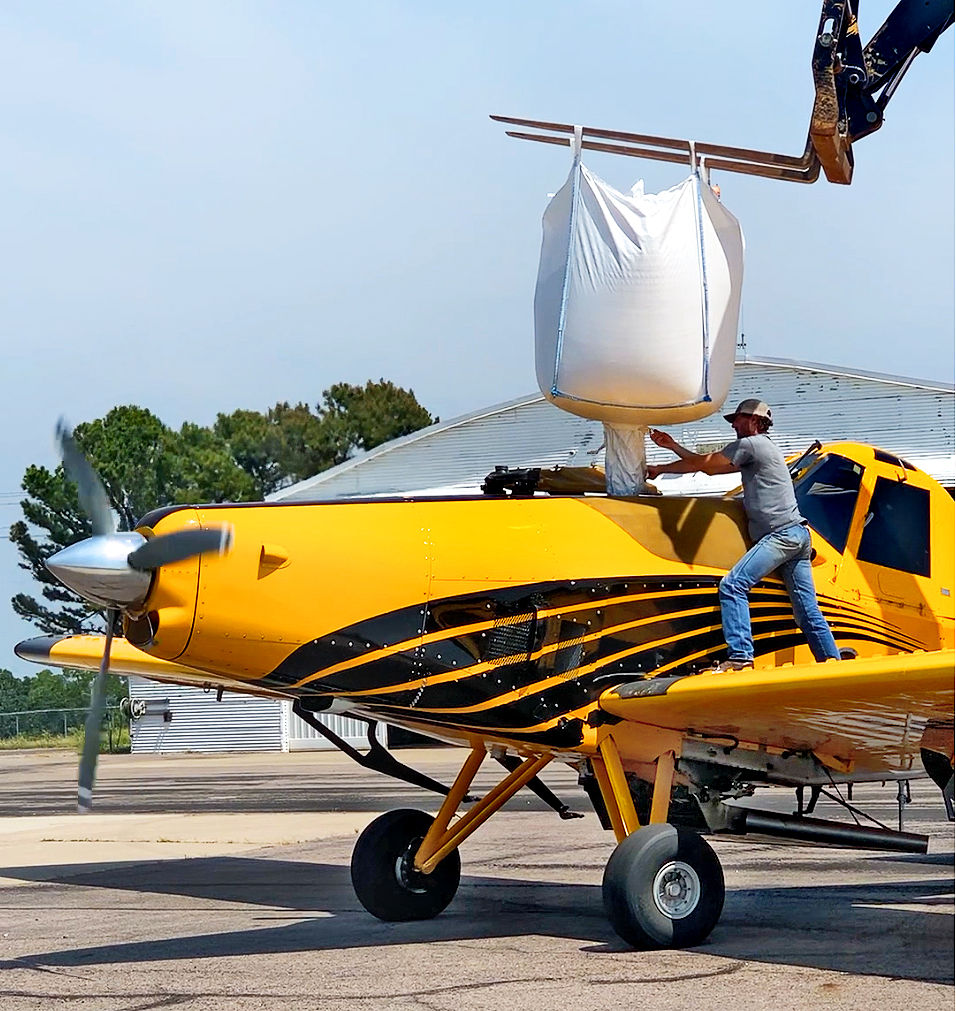
This year, the Oklahoma Department of Wildlife Conservation aerially applied Japanese millet seed to about 2,000 acres around four reservoirs.
Airplanes dropped the seed across exposed mudflats at Kaw, Keystone, Eufaula and Texoma lakes, taking advantage of this year’s favorable conditions to grow food for migrating waterfowl.
Japanese millet is a cultivated relative of wild barnyard grass. It produces an abundance of carbohydrate-rich seeds that ducks readily feed on, making it an attractive addition to Oklahoma’s wetlands, mudflats and shorelines. The millet also supplements food provided by native moist-soil plants like smartweeds, sedges and grasses.
ODWC’s millet seeding strategy is opportunistic. Biologists look for freshly exposed, wet mud with enough growing season remaining for millet to mature. These conditions allow seed to germinate without tilling the soil, and aerial application makes it possible to cover large areas that would be difficult to reach with ground equipment.
Millet matures in roughly 60 days, making it well-suited to the short growing window available on late-summer mudflats when lake levels are low.
But growing a good millet crop is only part of the equation. Water must return to the seeded areas during fall or winter for waterfowl to access that food. But the return of water is never guaranteed. The same conditions that favor millet also often encourage other desirable wetland plants, adding to the food available when those areas flood.
Also, as flooded millet breaks down, its stems and leaves provide substrate and organic matter that support aquatic invertebrates, which provides ducks with protein critical to their diet.
By watching lake levels and responding when the proper conditions line up, ODWC’s aerial seeding program helps turn exposed mudflats into productive feeding habitat for migrating waterfowl.