
The Lotspeich Family in northwestern Oklahoma has received the 2026 Landowner Conservationist of the Year honor from the Oklahoma Department of Wildlife Conservation.
The main Lotspeich Ranch is 10,000 acres of native grass, forbs and shrubs in northern Harper County. An additional 3,950 acres of farm ground, of which 750 acres are irrigated, are in Beaver County.
Landowner Troy Lotspeich’s great-grandfather came to Oklahoma in the 1890s, bought a quarter-section of land, and then bought the current ranch in 1903.
In a 1965 article in Oklahoma Wildlife magazine, Kenny Lotspeich (Troy’s grandfather) said, “Not many years ago, there were ‘no hunting’ signs on the ranch north of Laverne. … The ‘no hunting’ signs were removed. … I finally found out those signs were keeping my real friends away, and the blamed poachers were getting my birds.”
The Lotspeiches run 600 cattle in a cow/calf operation, which are rotated through 25 paddocks on 10,000 acres during the growing season and then moved to the crop ground in the winter to graze wheat pasture supplemented by alfalfa hay or grain from the irrigated ground. Water lines totaling 35 miles fill 20 stock tanks that provide at least one water location for each paddock, allowing high-intensity, low-duration grazing to maximize wildlife habitat while following “take half, leave half” grass management.
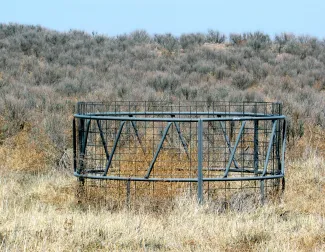
High-intensity, short-duration grazing improves the soil and organic matter, which allows for better infiltration and storage of rainwater. It’s important to catch as much moisture as possible, since the average annual precipitation is only about 22 inches in the area. This gives native grasses and forbs a longer recovery time and provides food for wildlife. Troy monitors usage with grazing exclosures, like the one seen in the photo above.
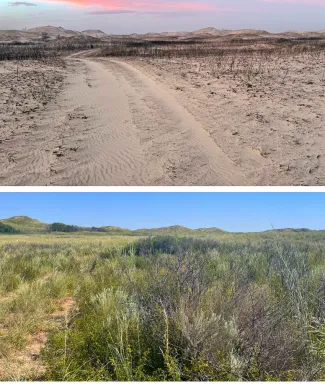
Wildfires have helped shape the current vegetation composition. Prairie plants are fire-tolerant and grow even with minimal rainfall, and fire helps to manage an ecosystem that historically evolved with fire.
The success of Lotspeich’s program is evident in the rich prairie wildlife community. Species present include northern bobwhite, white-tailed deer, mule deer, elk, dove, prairie dogs, burrowing owls, ring-necked pheasants, and wild turkeys. Ducks, geese and sandhill cranes also use the ponds and the river on the ranch.
Outside of family and friends, some guided hunts occur for northern bobwhite and white-tailed deer. Youth hunts also occur on the ranch. The family raises and trains their own bird dogs.
On the ranch, Troy and his family collaborate closely with ODWC, Natural Resource Conservation Service and Farm Services Administration, and he is also a member of Pheasants Forever/Quail Forever, National Wild Turkey Federation, and the Candidate Conservation Agreement with Assurances (CCAA) for lesser prairie-chickens.