2026-27 QUAIL HUNTING SEASON OUTLOOK
By Tell Judkins, Wildlife Biologist
Over thirty-five years ago, the Oklahoma Department of Wildlife Conservation (ODWC) began conducting roadside surveys to monitor quail numbers across the state. In August and October, 81 routes of 20 miles in length are surveyed in all counties except Oklahoma and Tulsa, which are excluded due to urbanization.
With few observations in general, these roadside surveys can have a wide degree of variability, but the consistency of the survey methodology over time allows us to interpret the information on a historical scale. These surveys give us an index of bird numbers, not an actual census.
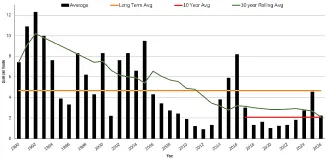
Several factors can impact the observability of birds along the route. August surveys give biologists an idea of breeding success, while October surveys reveal a glimpse of recruitment for the fall hunting season. Typically, August survey numbers are a less reliable hunting season predictor than October’s, since some individuals will simply not survive through summer. Long-term and year-to-year trends are important for hunters and biologists alike. Survey numbers have cycled from the lowest recorded on these surveys in 2012 up to a peak in 2016 that quickly fell back to previous lows, rising again to near long-term averages this past season.
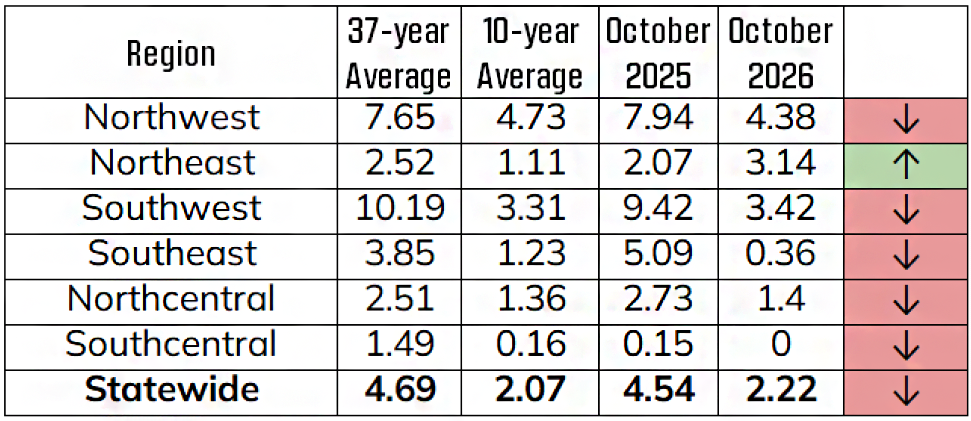
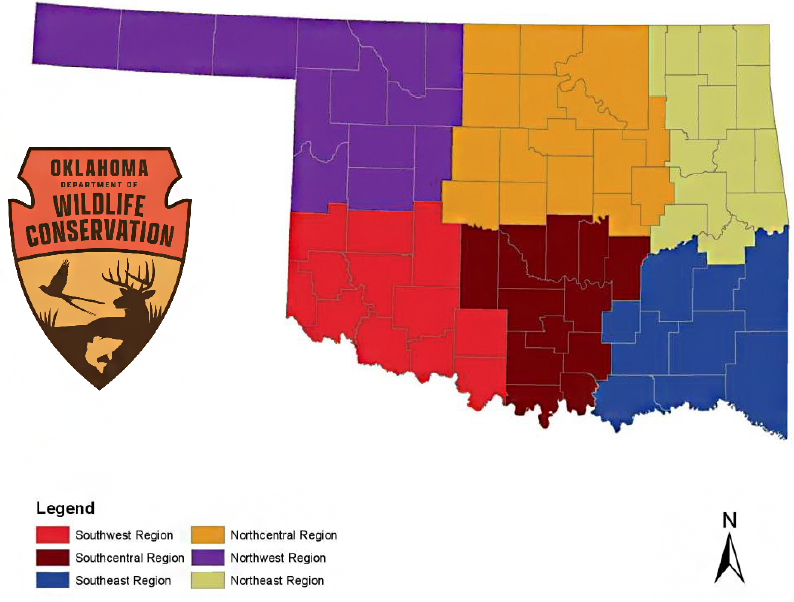
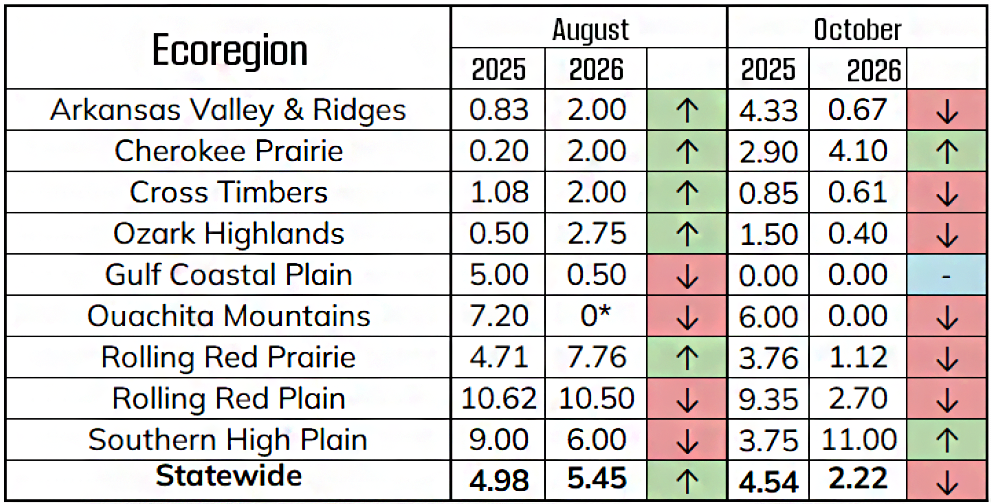
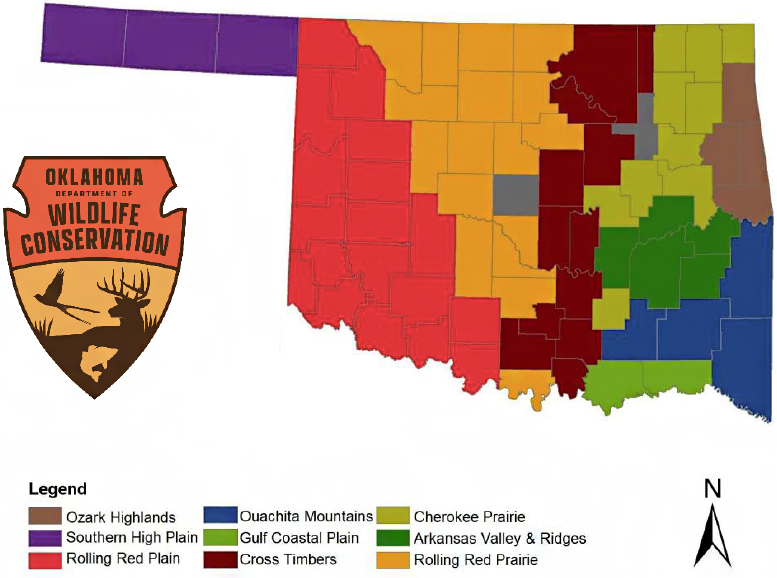
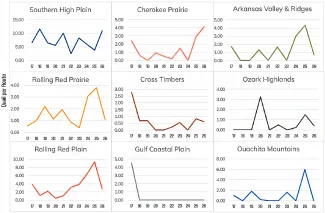
Data are analyzed in two ways: by region (Figure 1, Table 1) and by ecoregion (Figure 2, Table 2). Looking at data both ways can enhance understanding about fluctuations in quail numbers.This year, the statewide average decreased by 51% from 4.54 quail per route in 2025 to 2.22 in 2026.
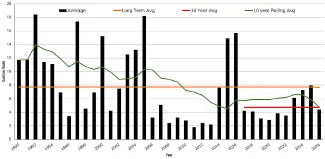
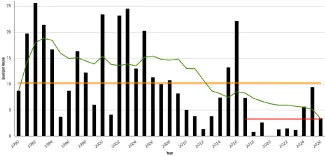
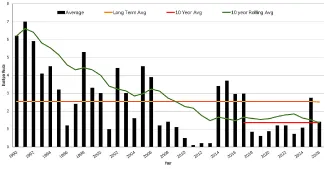
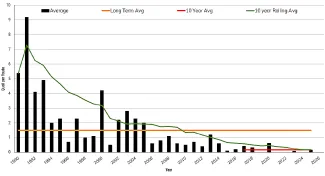
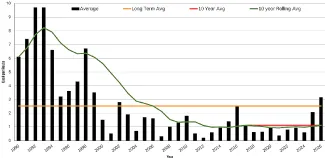
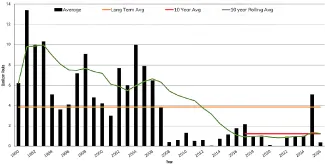
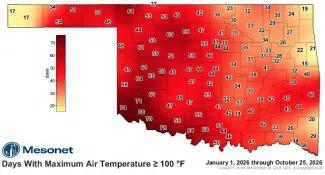
The 2026 August surveys highlighted increases in quail numbers in all regions except the southeast. After about double the average number of days above 100 degrees F this summer, the October surveys told a different story: All regions except the northeast declined going into November (Table 1). Figures 4-10 below show the average survey results for each region for 1990-2026. A line showing the rolling 10-year average has been added to these figures to help visualize the changes and relationship over longer periods.
When the statewide numbers are broken down by ecoregion, readers can see which areas are producing better or worse year-to-year (Table 2, Figure 3). The Cherokee Prairie of the northeast and the Southern High Plains of the Panhandle, both of which were least impacted by "exceptional" drought, did see an increased number of quail on the roadside surveys in October. Analyzing data this way shows primarily three of the nine ecoregions driving this year’s statewide average: Southern High Plain, Cherokee Prairie and Rolling Red Plain.
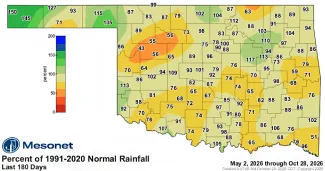
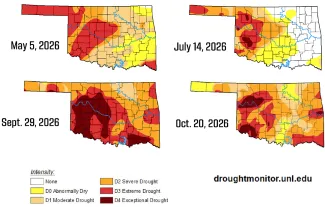
This year has seen the ups and downs that define Oklahoma’s weather. The 2025-26 season kicked off with about 57% of the state in some level of drought. As the year continued, weather patterns brought timely rains that led to excellent conditions for early summer nesting. By July, drought had increased to about 65% of Oklahoma, rapidly intensifying during August to 100% of the state being in some level of drought — where it has remained since (Figure 13).
A "Super El Niño" forecast was expected to bring precipitation this past summer, but it wasn’t until the remnants of Hurricane Polo in late September that the state saw some relief from extreme drought. As of mid-October, 100% of the state remains in some level of drought and about 70% of the state is experiencing severe, extreme or exceptional drought levels (Figures 11-13). Current climate models forecast the current Super El Niño to peak in November, then begin shifting back to more normal conditions by spring.
Brood reports seem to show that the nesting season started in early June with good early nest success. Overall age structure of observed bobwhites in the October surveys show 88.9% full grown, 9.4% three-fourths grown, and 1.7% half grown birds. This structure tends to relate with a strong early hatch but also indicates some level of nest success despite the extreme heat and drought this summer.
No scaled quail were observed during the 2026 October surveys. There are only a few routes in Oklahoma with the opportunity to observe scaled quail. So, this is not a prediction of scaled quail abundance. ODWC biologists have received numerous scaled quail sighting reports in the Oklahoma Panhandle in 2026.
ODWC is again collecting quail wings from public land hunters to better evaluate the quail population. Hunters who harvest a bird from select Wildlife Management Areas (WMAs) are asked to devote a few extra minutes to assist biologists by placing one wing into a provided envelope from each harvested quail (whichever is least damaged as long as only one wing per bird), fill out the envelope, and leave it in the wing survey box. WMAs with wing boxes will be Beaver River, Canton, Cimarron Hills, Cimarron Bluffs, Cooper, Cross Timbers, Drummond Flats, Ellis County, Fort Supply, Hulah, Kaw, Optima, Osage, Packsaddle, Pushmataha and Sandhills. Participation in this data collection effort provides vital information about nesting success/timing and helps improve overall management.
In summary, hunters will likely find areas of fair quail numbers where habitat conditions are most favorable and drought had a lessened effect. Hunting may not quite be what it was at the last observed production peak or “boom” in 2016, but we expect hunters to find birds throughout the state. Quail season opens Nov. 14, 2026, and runs to Feb.15, 2027. Daily bag limit is 10 quail. For hunting resources and tips, go to wildlifedepartment.com/hunting/resources/quail.
Additionally, the Oklahoma Wildlife Conservation Commission adopted new rules in 2025 that require nonresidents accessing certain Oklahoma public hunting and fishing areas to check in and out of that area via the GoOutdoorsOK app or GoOutdoorsOklahoma.com. Also, nonresident game bird hunters are required to possess a Nonresident Game Bird Permit if hunting any game birds on any WMA in Oklahoma. For more detailed regulations and other information, consult the Oklahoma Fishing and Hunting Guide online at wildlifedepartment.com/hunting/regs or in print wherever hunting and fishing licenses are sold.
ODWC is asking out-of-state hunters traveling to Oklahoma this hunting season to inspect their hunting dogs carefully for injury, open wounds or fly larvae before entering the state. Especially if traveling from or through New World screwworm (NWS) Infested Zones or Adjacent Surveillance Zones.
Ultimately, remember the outdoors is always open! Get out there; work some ground; trust your dogs and make a memory enjoying Outdoor Oklahoma!
Learn to Hunt Podcast on Quail Hunting
In a recent "Learn to Hunt" podcast from the ODWC, Communication & Education Specialist Pake Wise sat down with Wildlife Biologist Tell Judkins to break down what new hunters need to know for the 2026-27 quail hunting season. "The Basics of Quail Hunting" is available now on the Outdoor Oklahoma YouTube channel. Check it out HERE before the season opener!