The Wildlife Investigations Team
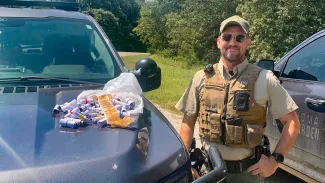
When most people think of a game warden, they think of license and compliance checks. But what often gets overlooked is that some wildlife violations warrant much more than a simple ticket. What happens when wildlife crime stretches across multiple counties or even multiple states?
License fraud, wildlife trafficking, and cases that span complex multistate, multicounty jurisdictions can require hours of investigation, collaboration, and specialized knowledge. In response to a spike in these crimes, the Oklahoma Department of Wildlife Conservation (ODWC) established the Wildlife Investigations Team (WIT).
Emily Long, an Oklahoma investigator and WIT team lead, offered insight into this lesser-known side of wildlife enforcement, explaining how the team works to address complex wildlife crimes across Oklahoma and beyond.
WIT started in 2022 with 17 members, comprising game wardens who are stationed statewide. “The goal of creating the team was to create a network of trained, specialized investigators who were experts working complex investigations and to assist other game wardens, local, state, and federal agencies,” Long said.
Today, WIT has 13 members, each of whom carries full-time responsibility and county assignments as game wardens, all while volunteering their time and expertise to the team on their own time. “With no monetary value, these dedicated members go above and beyond their normal duties to help preserve the integrity of the wildlife they have dedicated their careers to protecting,” Long said.
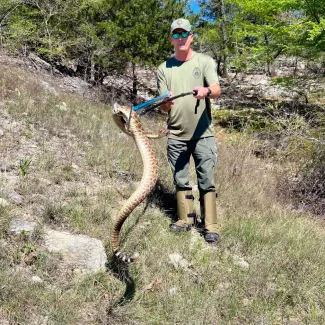
That commitment has translated into thousands of hours spent investigating and training. In 2025, the members dedicated 1,400 hours to investigations and more than 600 hours to training. The depth of this commitment is evident in the results: more than 300 charges in state and federal courts combined, $200,000 in fines, restitution, and forfeitures, and more than 20 multistate investigations, including dozens of state and federal search warrants and seized assets.
Following the Paper Trail
The WIT works in two specialized areas: license fraud and trafficking. License fraud cases often sound small, such as false residency claims or use of expired IDs, but investigators often find these violations can connect directly to the illegal harvest of big game on a much larger scale, with many cases resulting in felony charges.
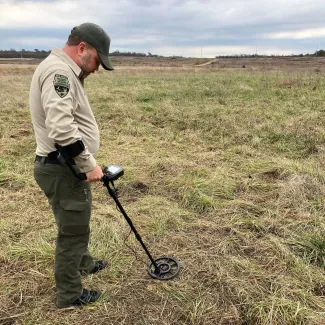
In one investigation, WIT uncovered a group of nonresidents who illegally obtained resident hunting licenses and then illegally harvested a multitude of deer. The case led to 50 charges, including felonies and misdemeanors, that could result in more than $25,000 in fines, $11,000 in restitution, more than $1,500 in reimbursement to ODWC for the license fee difference, license revocation, and jail time. “Cases such as these are far too common to list,” Long said. When fraudulent licenses are used to harvest wildlife illegally, the consequences extend beyond the individual violation.
Beyond State Lines
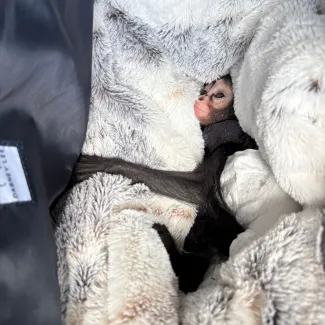
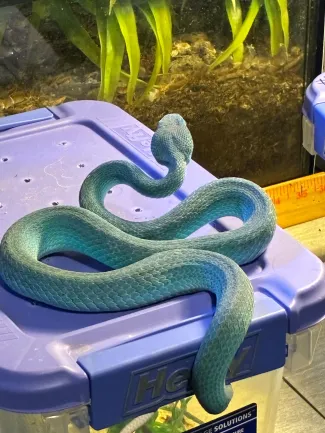
The team’s trafficking investigations take that work even further. WIT frequently collaborates with the U.S. Fish and Wildlife Service (USFWS) on cases involving animals being illegally sold and transported through the state. One case involved the seizure of a spider monkey that was transported and sold illegally in Oklahoma. Another case involved paddlefish and their eggs that game wardens successfully intercepted before they were taken from the state.
“A total of 45 pounds (estimated worth of more than $18,000) of roe was seized, and the case has been filed with the court,” Long said.
This is just a small portion of what WIT handles, but these cases illustrate a much larger problem. The United Nations Office on Drugs and Crime has estimated that illegal wildlife trade generates $7 billion to $23 billion year after year. This makes it the fourth-largest illegal trade worldwide behind narcotics, human trafficking, and counterfeit goods. In Oklahoma alone, license fraud is estimated to have a $1.1 million annual impact.
The Unexpected Side of Wildlife Law Enforcement
Wildlife law enforcement is at the core of what WIT aims to do, but investigators can often uncover much more. Game wardens are sworn state peace officers with full jurisdictional powers, meaning a wildlife investigation can at times lead investigators into cases involving public safety, property damage, illegal drugs, or stolen property.
In one case, WIT was investigating two people who were illegally killing wildlife and were also killing cattle and other livestock. Multiple search warrants were executed, leading to a search warrant being issued for a marijuana growing facility.
The team's reach also extends beyond Oklahoma. In an Idaho investigation involving an illegal outfitter, WIT interviewed Oklahoma residents connected to the case. The information collected during these interviews provided crucial evidence that helped Idaho file 48 criminal charges against the outfitter. The outfitter was ultimately sentenced to prison and received a lifetime hunting license revocation.
How You Can Help
Through all of the specialized training, search warrants, and multistate investigations WIT members conduct, some of the most important cases begin with something much simpler: a concerned citizen.
“Although many cases are found by hard work and sheer luck, most of our cases come to us from concerned citizens. … The majority of people are as concerned about wildlife conservation as we are,” Long said. The WIT may work behind the scenes, but its mission ultimately reaches everyone who depends on Oklahoma’s wildlife and natural resources. Every investigation, whether it involves a falsified license, illegally harvested wildlife, or cases that stretch past Oklahoma state lines, serves the same purpose: protecting the wildlife that belongs to all Oklahomans. Sometimes all it takes to protect wildlife is to speak up.
Tips can be submitted by contacting the ODWC Law Enforcement Division or by contacting your local game warden.