
There’s a soft buzz in the air. It’s not the sound of traffic or a distant lawnmower — it’s the flash of wings, the whisper of motion. For Sarah Rodefeld, nestled at her home in the woods, this buzz signals a call to stillness, to presence, and most of all, to wonder.
Come along with Sarah as she shares her love for hummingbirds and the joy she finds in photographing them. Who knows — her passion might just inspire you, too!
The Beginnings of a Hummingbird Journey
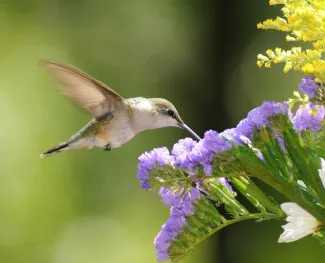
When Sarah moved to her home in 2002, she gained more than just land. She stepped into a space already buzzing with life. “The people who lived here before had about 30 feeders up,” she recalls. “The birds were already here when we moved in.”
Sarah downsized the number of feeders to keep the cleaning and refilling manageable. She then strategically placed the feeders around her porch, trees, and garden. Over time, a few favorite feeders — especially the one just outside her sliding glass door — became annual pit stops for her returning feathered friends.
Feeding turned into photographing around 2005. “Photography is expensive,” she admits with a laugh, “but you work up to the gear you need. It’s not just about the camera — it’s the lens, the practice, the patience.”
The Ruby Routine: Life With Hummingbirds
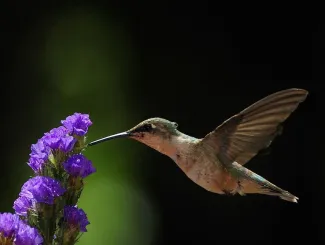
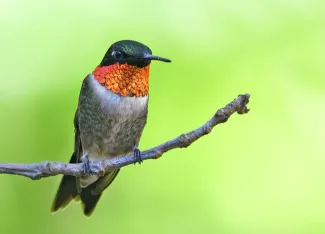
Most days from spring to fall, Sarah’s companions are ruby-throated hummingbirds — the vibrant green-backed jewels of the Oklahoma skies. Many return year after year. “One of mine I call Little Buzzy,” she says. “She’s louder than the others, has a different tone to her wings. When I hear that buzz, I know she’s back.”
The ruby-throated hummingbird is the most common and widespread of hummingbird species that have been documented in Oklahoma. As a group, hummingbirds are the smallest birds found in the state, measuring just 2.8-3.5 inches and weighing 2-6 grams. These tiny acrobats can beat their wings about 53 beats per second, even when flying backwards or hovering! Male hummingbirds develop a patch of iridescent throat feathers, or gorget, which can be used to attract mates and defend territories. The ruby-throated hummingbird’s gorget is a bright, metallic red. Females have a bright green crown and back, and a distinctive white spot just behind the eye.
Bringing Them In: Attracting Hummingbirds to Your Backyard
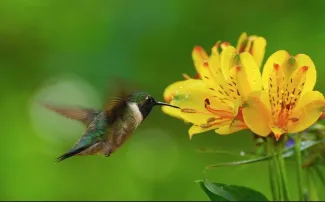
Want to turn your yard into a hummingbird photo haven? Sarah has a few tried-and-true tips:
- Color Your Yard: "They love red, orange, yellow- bright colors in general," says Sarah. From native coral honeysuckle to butterfly plants, and even her red garden tubs, her entire yard buzzes with visual energy.
- Feeders: "I start putting feeders up early in mid-March. That's when the early birds come. I keep mine up through mid-October. Choose a wide-mouth design so they're easier to clean, and clean them frequently."
- Earn Their Trust: "Spend time sitting quietly outside near the hummingbirds, allowing them to become familiar with your presence. Once they're comfortable seeing you there regularly, gradually introduce your camera for photography."
The Golden Hour: Photographing Hummingbirds in Oklahoma Light
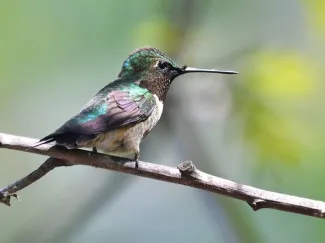
Lighting is everything. Living in a wooded area, Sarah has to dance with the shifting light.
“Early evening is best,” she explains. “Before the sun dips behind the trees and before you have to crank up your ISO too high. The birds are active then, and the light’s not as harsh.”
Her advice for newcomers? Be still. Be patient. “Just go sit out where the birds are. Read a book. Let them get used to you.” Over time, the birds begin to ignore your presence, and that’s when the magic happens.
In a world flooded with digital filters and photo edits, Sarah keeps it simple.
“Learn your settings. Learn your lens. Editing can only fix so much. Work to get the photo right out of the camera. It just takes time.”
Start Simple
If you are interested in attracting and photographing hummingbirds, Sarah’s advice is simple:
"Start with a feeder and a basic camera with a standard lens — it's a great way to begin. As you gain experience, you can always upgrade to higher-quality lenses."
When you feed Hummingbirds, they benefit, nature benefits, and you benefit. You don't need a fancy setup — just some patience, and an open heart." So pull up a chair on your porch. Hang a feeder or two. Let your yard go wild with color, have your camera ready, and listen for the buzz.