
Contacts
Area Details
Packsaddle WMA covers 19,659 acres, and is located in Ellis County 17 miles south of Arnett, Oklahoma on Highway 283. Located in the mixed grass prairie, it is a mixture of rolling sand hills and wooded bottoms with the South Canadian River as its southern boundary.
Uplands sites are vegetated with mixed grass species including big bluestem, indian grass, little bluestem, side-oats grama, and buffalo grass and brush species like shinnery oak, sagebrush, and sand plum. Bottomlands are dominated by cottonwood, elm, and hackberry trees. The average annual precipitation for the area is about 25 inches.
Going Quail Hunting?
During quail hunting season, wing collection boxes are placed at several wildlife management areas: Beaver River, Optima, Packsaddle, Cooper, Kaw, Drummond Flats, Canton, Fort Supply, Cross Timbers, and Pushmataha. Hunters are asked to donate a wing from each quail they harvest for research purposes. Ultimately, the wings can help determine the status of the quail populations at the WMAs and can offer clues about how next year’s season might pan out.
- Public Area Check-In: Non-residents must check in and out when accessing certain Oklahoma public hunting and fishing areas. There is no additional cost or limit on the number of check-ins.
- Deer Licenses: A 2 day waiting period applies to nonresident deer licenses purchased after the deer season has started. Licenses must be purchased at least 48 hours before hunting.
All shotgun hunting is restricted to federally approved nontoxic shot on designated WDU portions.
Closed Seasons
Same As Statewide Seasons
Seasons w/ Special Restrictions
- Deer Muzzleloader
Closed to antlerless mule deer hunting.
- Deer Gun
Open the first nine days only. Antlerless hunting permitted last two days of area season.
- Snipe, Woodcock, Rabbit, Squirrel, Predator/Furbearer Calling
Closed during the first nine days of deer gun season.
- Turkey Fall Gun
Tom only. Shotgun only.
- Pursuit with Hounds for Furbearers
Closed from the opening day of deer archery season through deer gun season and closed during spring turkey season.
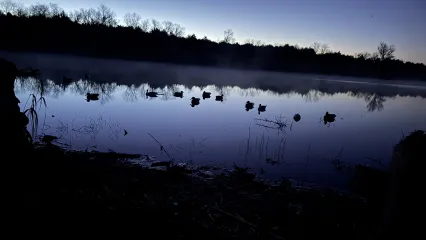
- Duck, Merganser and Coot, Sandhill Cranes
Closed during the first nine days of deer gun season. Hunting hours for waterfowl close at 1 p.m. daily on the WDU portion.
- Trapping
Open to water sets, live box traps and enclosed trigger traps only through Jan 31. Open same as statewide Feb 1 through end of February.
- Turkey Spring, Youth Turkey Spring
One-tom limit; seasons combined. Hunting hours close at 7:00 p.m. daily.
- Quail
Closed during the first nine days of deer gun season. Closed to non-resident hunting February 1-15.
Hunter and angler camping is allowed in designated areas during open hunting seasons.
From Arnett: 17 miles south on U.S. Hwy 283, 1 mile east on E0770 to headquarters on right (south).
- Quail: Bobwhite quail are usually present in good numbers, but are highly sought after.
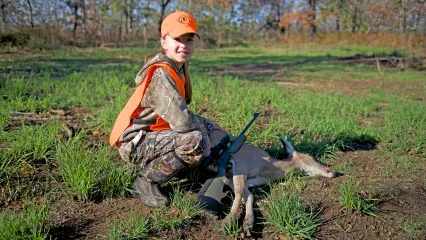
- Deer: White-tailed deer are present in fair numbers.
- Turkey: Rio Grande turkeys are usually present in good numbers but are heavily sought after.
- Rabbit: Mostly cottontails, but an occasional jackrabbit may be found.
- Furbearers: Coyote, bobcat, and raccoon are available.
- Dove: May be abundant during peak migrations around watering areas and weedy fields.
- Waterfowl: Limited to two wetland development areas.
Least Interior Tern: Can be viewed during summer months nesting and foraging on the South Canadian River.
Lesser Prairie Chicken: Occasionally seen.
Management efforts focus on producing native cover plants and wildlife foods such as ragweed and sunflower, although some small agricultural food plots are planted annually. Wildlife watering facilities have been installed, including windmills, water guzzlers, and small ponds. Cattle grazing is used to increase quail food abundance and improve brood habitat. Vehicle access is limited with few interior roads open to the public.
Six designated primitive camping areas are located in the area. Both lodging and restaurants are available 17 miles north in Arnett and 22 miles south in Cheyenne.
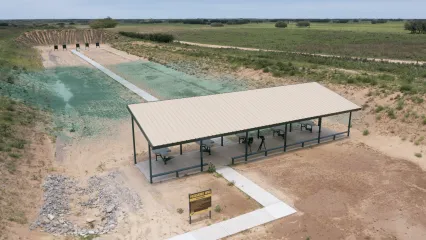
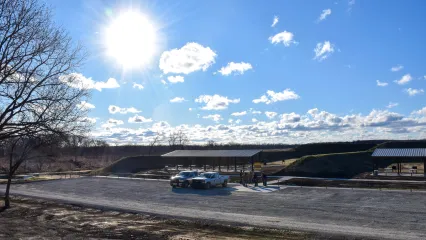
Features: 100-yard rifle range with 5 covered shooting benches, a trap range, and ADA access and parking.
Coordinates: 35.89844 N, 99.67547 W
Directions: From Arnett, 17 miles south on U.S. Hwy 283, 3.4 miles east on E0770 to the shooting range on the left (north) side of the road.
Be sure to review Department-Managed Area Rules on shooting ranges before use.
Fishing opportunities exist at Lake Lloyd Vincent 30 miles northwest and Black Kettle Lake 15 miles south. There are no fishing opportunities at Packsaddle WMA
Oklahoma Tourism and Recreation Department
Post Office Box 52002
Oklahoma City, OK 73152-2002
(800) 652-6552 or (405) 521-2409
www.travelok.com