How a Simple Pine Box Brought the Eastern Bluebird Back from the Brink
The old-timers on the western frontier knew the somber, unmistakable geometry of four pine planks and a handful of iron nails. In a rugged landscape where life was fragile, that unvarnished wooden shell stood as the ultimate symbol of human mortality – a quiet, final surrender to the prairie dust. It was an architecture of grief, meant to hide away what we had lost. For generations, a simple pine box meant the end of the trail.
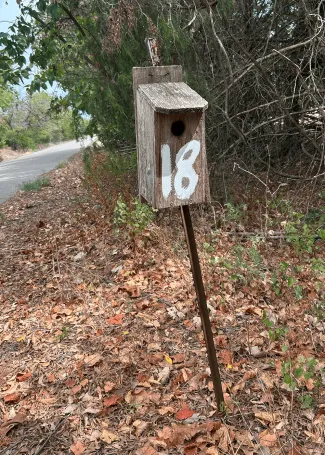
But the American frontier has always been a place of radical reinvention, and today, a different kind of simple pine box is rewriting the laws of mortal doom. Fastened to fence posts and pasture poles across the countryside, these modest wooden structures are built not to bury life, but to cradle it. These are bluebird nesting boxes, and their minimalist design has staged one of the most astonishing conservation triumphs in history.
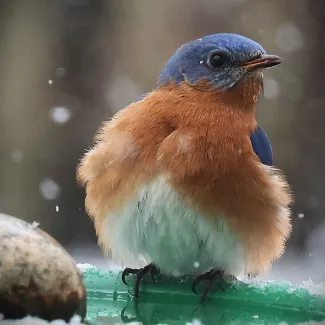
This historic rescue mission was born out of a quiet crisis, as the eastern bluebird (Sialia sialis) was steadily vanishing from the American landscape. Once as common as the robin, this iconic songbird with their sky-blue feathers, plummeted into a devastating tailspin, suffering a catastrophic 90 percent population decline by the 1970s. The bird that Thomas Jefferson once celebrated as a treasured neighbor was succumbing to a perfect storm of human expansion, changing technology, and aggressive foreign invaders.
The crisis was rooted in a severe housing shortage. As obligatory secondary cavity nesters, bluebirds lack the physical anatomy to excavate their own homes, relying entirely on existing hollows like those created by woodpeckers, or those in rotting tree trunks to raise their clutches. During the spring breeding season, females weave neat cup-shaped nests out of grasses to incubate clutches of three to seven pale blue eggs. However, as modernization swept through rural areas, Americans systematically cleared out old orchards and removed dead trees. Even agricultural infrastructure worked against them: the rustic, decaying wooden fence posts that traditionally provided suitable but not perfect nesting pockets were replaced by cold, sterile metal T-posts. Widespread reliance on chemical pesticides, like DDT, further poisoned their primary food supply of insects and wild berries.
The final blow to their survival came from a fierce battle over the few remaining sanctuaries. In the 1800s, New York ornithologists introduced the non-native house sparrow and European starling to Brooklyn and Central Park. Highly adaptive and hyper-aggressive, these invasive cavity nesters routinely overwhelmed the timid bluebirds, evicting them from their homes and taking over entire territories. Homeless and outmatched, the bluebird population was pushed to its absolute limits, teetering on the edge with hopes of recovery, then the deep freeze in the brutal winter of 1977 wiped out an estimated 60 percent of the remaining survivors.
Collectively, bluebirds – eastern, western (Sialia mexicana), and mountain (Sialia currucoides) – have always been admired by those closest to the land because of how variously they eat crop and garden pests. So, naturally, farmers and gardeners would put up bird houses of all kinds in and around fields and gardens to attract a natural pest control. As the perfect storm bore down on the bluebirds, the grassroots momentum officially caught fire in 1926 with a single man from Quincy, Ill., named Dr. Thomas Edgar Musselman. Recognizing that local populations were free-falling, Musselman began building simple wooden nest boxes with removable tops, packing them into his vehicle, and mounting them on fence posts along backcountry roads. With that act, Musselman originated the concept of the “bluebird trail” – a strategic line of sequential, monitored nest boxes designed to mimic natural cavities while allowing human caretakers to ward off predators. Musselman’s backcountry experiments quickly exploded into a nationwide citizen science crusade. By the late 1930s, he had personally erected more than 1,000 bluebird boxes across Illinois. In 1934, he published a rallying cry in Bird-Lore magazine, urging regular citizens across North America to build their own local networks. As the movement grew, fellow innovators perfected Musselman's original wooden architecture to defeat the bluebird's worst enemies. A conservationist named William Duncan designed a standardized box with an entry hole measuring exactly 1.5 inches in diameter. This measurement was pure engineering genius; it was just wide enough to welcome an eastern bluebird, but too narrow for the hyper-aggressive, invasive European starling to squeeze inside. By the time the crisis peaked, this movement had given rise to the North American Bluebird Society in 1978.
Remarkably, this movement also had unintended additional results by scattering millions of simple pine boxes across the American landscape. Citizen scientists created a massive real estate boom for a whole host of other native, struggling secondary cavity nesters. The small, standardized 1.5-inch entry hole became salvation of tree swallows, black-capped chickadees, tufted titmice, and house wrens that were kept safe from the predatory reach of starlings and raccoons. To manage this shared success, conservationists developed a brilliant technique called "pairing boxes." Because tree swallows and eastern bluebirds are territorial against their own kind but peaceful toward each other, volunteers mounted two pine boxes just 15 to 20 feet apart. A pair of swallows will claim one box and fiercely defend the immediate area from other swallows, leaving the neighboring box wide open for a pair of bluebirds to nest in peace. This transformed single trails into diverse and thriving recovering ecosystems.
Thanks to the tireless efforts of volunteers and organizations like the North American Bluebird Society, the global breeding population has rebounded significantly to an estimated 23 million birds.
This magnificent resurrection is definitive proof that regular citizens possess the collective power to change the world with their own two hands. The frontier trail is still open, and you can easily join this historic, grassroots legacy, like I did while in college at Oklahoma State, by acting today. Start by building a nest box using free, open-source blueprints from the North American Bluebird Society, maybe establish a local trail, and finally, become a citizen scientist, by going to your app store and downloading the Project Nest Watch app so you, too, can add valuable population data to your area.
Grab your hammer, secure your pine planks, and help write the next victorious chapter of American conservation.