Owning your own property for hunting is something wonderful, but sometimes simply having a place doesn’t mean the hunting opportunities abound. Oftentimes, a helping hand is needed in getting a piece of land to reach its full wildlife-related potential.
The balance of food and cover resources needed by so many species may be skewed one way or the other, so steps need to be taken to correct these issues. Maybe there is too much woody encroachment, leading to a loss of moisture and sunlight for those much-needed forbs. Maybe invasive species of vegetation have overtaken large expanses, thereby putting up too much competition for the forbs and native grasses that are beneficial.
No matter the issue, habitat management is crucial if you want to get the biggest return on your investment. Some practices require small amounts of time and effort, while others require big commitments, physically and financially. Fortunately, there are a handful of resources available to landowners wanting to improve wildlife habitat, and one of those is your Oklahoma Department of Wildlife Conservation.
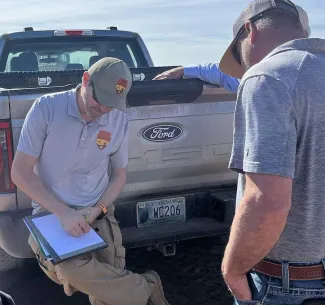
ODWC’s private lands section is made up of regional biologists who work with landowners seeking habitat improvements. This often comes in the form of in-person visits to the property – called technical assistance site visits – where assessments are made regarding a variety of factors… including what is present, what is missing, and in what abundance, health, and balance the plant communities appear to be.
These technical assistance site visits are provided at no charge to the landowner, and advice can be given at that time on initial steps toward reclaiming the full potential of the habitat. If large-scale work is in order, landowners are welcome to submit an application for ODWC’s Wildlife Habitat Improvement Program (WHIP). This is a cost-share program which allows landowners to perform these large-scale projects, while recuperating some of the expenses. ODWC is able to reimburse landowners up to $4,500 annually for work done, and these projects can include practices like brush management (getting eastern redcedars and over-abundant mesquites thinned out); timber stand improvements (creating clearcuts and openings in timber stands to reduce canopy coverage); and establishing firebreaks in preparation for employing prescribed fire as a management tool.
The period for requesting and submitting applications for WHIP is Sept. 1-Dec. 31 each year. To find out more about WHIP, to request an application, or to submit a request for a general technical assistance site visit our lands-and-minerals/landowner-programs/whip page. Once a WHIP application is received, the private lands biologist in your region will reach out to schedule an in-person site visit and assessment, and to discuss your habitat management goals. From there, a management plan will be drafted – using a handful of criteria in which the viability and potential success of the project will be measured – and the plan will be reviewed. During the process of drafting the management plan, the amount of available reimbursement will also be determined… again, with a maximum available of $4,500. Approved projects are given an official start date of July 1 (following the application cycle) and are given a full year for completion. Once completed, the private lands biologist returns to verify that work was done to specifications, and reimbursement is given based on percentage of work completed.
Keep in mind that approved WHIP projects require landowners to agree to a minimum 10-year commitment on that habitat improvement. In other words, if funding was made available to create clearcuts and openings in a timber stand, the landowner agrees to maintain that open canopy for at least 10 years. Or, if funding was made available to establish firebreaks, the landowner agrees to keep those firebreaks useful and functional for at least 10 years.
Oklahoma is well over 90-percent privately owned, so wildlife habitat management is very dependent on landowners rising to the challenge of improving the habitat on their properties.
I believe that the great conservationist Aldo Leopold summed it up quite well, when he said, “Conservation will ultimately boil down to rewarding the private landowner who conserves the public interest.” And this goes along with the part of ODWC’s mission statement of “fostering stewardship with those who care for the land.”
If you are interested in having your property’s habitat needs assessed, please reach out to the private lands biologist in your area. Contact information is available on the Landowner Programs page. Remember, we are here to help, and we are happy to help.