
Farm ponds in Oklahoma can provide an excellent fishing opportunity. Whether the pond is only a half-acre or as big as 20 acres, they can be a very enjoyable and rewarding place to fish. And if improving your pond is on your list of things to do, this can also be an enjoyable and rewarding experience.
There are many ways to improve fishing in your favorite farm pond, but habitat enhancement is one of the best ways to improve the fishery for both fish and everything else that lives in the pond. There are two major types of habitat – cover, and spawning substrate/area. Cover would be any sort of structure in the water in which fish can either use for protection, or as a place to ambush a meal. Spawning substrate is what is on the bottom of a pond in any particular area, like sand, gravel, rocks or silt.
The first step is to survey the pond to see what habitat is lacking and what is already in the pond. Next, look at what resources you have available to use. Are there redcedars nearby, or willows growing next to the pond? Then make a plan that includes what type and how much habitat you would like to install in the pond. The sky is the limit when it comes to habitat – this is when you get to be creative. You really can’t go wrong with whatever you do. Fish will use just about anything for cover, but if you want to get the maximum benefit from the effort you put into your pond, there are a few techniques that you will want to consider.
Cover will probably be the easiest type of habitat to add. Oklahoma has a large eastern redcedar population, and it turns out that these trees are excellent fish habitat when sunk into a pond. State fisheries biologists have been utilizing redcedars for decades when implementing large-scale habitat improvements in the state’s reservoirs. Everything from top predators like largemouth bass, to baitfish like sunfish and minnows, and even invertebrates, will utilize redcedars for cover. If you don’t have a readily available source of redcedars, any woody vegetation can be used. A few other common types that are typically found near ponds include oak, elm and willow. If possible, brush should be added in shallow water near spawning areas to provide cover for small fry, and in deeper areas for cover during the colder months. All you need are some concrete blocks, rope, and a saw to get started. During the warm months, smaller trees can be drug out and placed in shallow water by wading, but a boat of some sort will be needed for deeper locations.
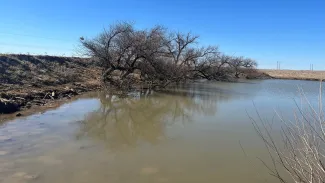
Willows love growing next to wet areas and this makes them a great option for half cuts. This must be the easiest and fastest option for habitat improvement. This involves finding a willow or any tree growing next to the shoreline and cutting on the side away from the water, waist high, halfway through the trunk or until the tree starts to fall. This will allow the tree to fall into the water and still be attached to the trunk. This will provide excellent shallow shoreline cover. The benefit of using willows is that they may sprout from the cut portion of the tree and continue to grow, providing even more cover.
If you have ever noticed a whole bunch of circles all clumped together in shallow water, you have found the spawning substrate preferred by sunfish to make their spawning bed. Most fish prefer to spawn in an area free of excessive silt, which can sometimes be hard to find in an older pond. One method fish biologists use to create beds is to add small pee gravel, about one inch in diameter, in large piles about three to six inches thick in shallow water – preferably one to three feet deep. Adding gravel from a boat or by wading and dumping it by hand can be done, but it will be very labor-intensive. It is best to install gravel beds during low-water periods or during pond construction when a tractor or equipment can be used. Geotextile fabric can be put down first to help prevent the gravel from sinking into the pond bottom over time.
Other options for habitat include rock piles. Any size rock will work – just make piles scattered around the pond. The space between the rocks will give smaller fish and invertebrates places to hide.
These are just a few simple, low-cost ways to improve the habitat in your favorite farm pond. Fish will use almost anything for habitat, so be creative and this is the time to use your imagination. In a local reservoir where we conduct electrofishing surveys, there was a plastic patio chair that blew into about six to seven feet of water, and every time we electrofished over it, we would collect several largemouth bass hiding under it.
So, again, anything can be habitat (although do keep in mind the issues and legality of littering). Not only might this improve the fishing opportunities in your pond, but also it can bring the satisfaction of a job well done.