I recently watched a video from Kansas State Extension, narrated by Dr. Drew Rickets youtube.com/watch?v=Pwfiow4QIIM, and it gave me an idea for this article. In northwest Oklahoma, I get asked by landowners if they need trees to have white-tailed deer. This is usually in reference to removing invasive trees like eastern redcedar.
We associate trees with good white-tailed deer habitat. That may be accurate in areas that have been historically forested, like we have in central (post oak-blackjack oak) and eastern Oklahoma (oak-hickory and oak-pine). That is not accurate in the prairies that were historically free of trees, and this includes the tallgrass, mixed-grass, and shortgrass ecoregions of Oklahoma.
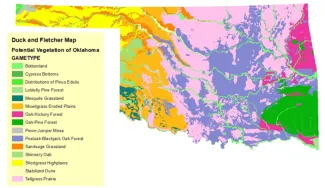
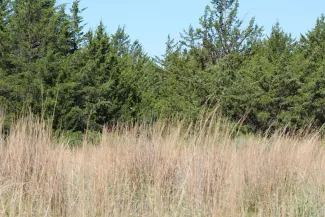
Woody encroachment has closed off some areas, even in the central and eastern part of the state that were historically tallgrass or mixed-grass prairie. This is mainly because of the removal of fire that once determined the vegetation composition and structure. Trees in the prairie areas should only occur along the creeks and rivers like they occurred historically. Invasive trees like eastern redcedar have invaded the prairie because of the lack of historic fire.
Some of the biggest deer I have seen in northwestern Oklahoma have been in mixed-grass or tallgrass prairie devoid of woody encroachment.
Grazing and prescribed fire are both used to manage woody encroachment. Fire makes the forbs more palatable and nutritious for deer and other species. Prescribed burning works best if done every three to five years, and maybe even longer intervals depending on your annual rainfall. Available nesting habitat will decrease if you burn the same ground every year. Set up a map and keep records of the areas that you burn. This will help leave the habitat necessary for all the life cycles of ground-nesting birds and food and cover for deer.
Responsible grazing leaves the previous year’s growth for ground-nesting birds for nesting, brooding, and thermal cover. This includes northern bobwhite, prairie chickens, and other prairie bird species.
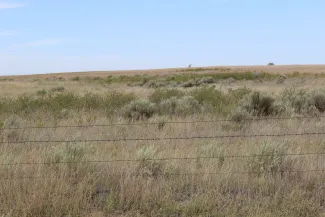
White-tailed deer fawn survival has been shown to decrease in these early successional invasive tree habitats. They will bed or hide in the grass or associated shrubs that include sand plum, sand sagebrush, and fragrant sumac. At least 30 percent shrub cover is needed on the landscape for thermal cover for a suite of prairie wildlife. Northern bobwhite prefer fragrant sumac.
The Oklahoma prescribed burn association (OPBA) can help anyone interested in fire and help you find a local PBA to join. The Private Lands staff at ODWC can also help with any questions you might have and come out for a free visit and look at your land with you.