McCurtain County farmer John Sanders has been selected as the 2025 Landowner Conservationist of the Year by the Oklahoma Department of Wildlife Conservation.
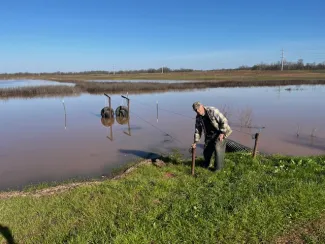
Sanders mainly produces corn and soybeans on his 900-plus acres situated close to Red Slough and Grassy Slough wildlife management areas. His passion is waterfowl — both hunting and developing wetland habitat. This passion originated from his boyhood days growing up in east Texas. Living near the historic Caddo Lake, he learned to take advantage of waterfowl hunting opportunities there and became forever hooked.
Sanders grew up working in the oil and gas industry and has farmed extensively in Kansas and Oklahoma. Now in his mid-80s, his love for waterfowl hunting and managing wetland habitat have increased many times over.
The property has a natural oxbow lake (important for waterfowl roosting) and a riparian area in which the landowner has developed 11 small wetland units. Sanders has designed and installed unique water-control structures. Upstream of these units, he has developed the capability to seasonally flood a portion of his cropland base to create a shallow 50-acre lake.
Combined, these habitat types offer a diversity of forage bases and cover important in meeting waterfowl needs.
He is also a “hands-on” fabricator and “seat-of-the-pants” engineer. Through trial and error, he has developed multiple wetland units along Holly Branch Creek, providing quality habitat for waterfowl and other migratory birds. Accomplishments include personally surveying and developing dike systems as well as constructing a weir system on the creek to provide reliable seasonal flooding of this habitat.
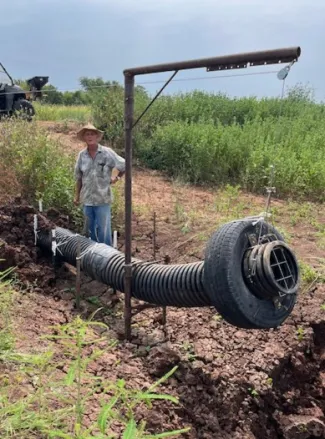
Perhaps just as impressive are his fabrication of unique, multiple water-control structures to help combat and control beaver plugging for each unit. Using common farm materials, he personally came up with a one-of-a-kind design. They are proving to not only minimize work in conducting controlled drawdowns but are also very cost effective in their construction.
To minimize beaver activity around traditional water-control structures (half-round flashboard risers), he has also designed an electrical safeguard to minimize beaver plugging and reduce manpower. Designed to float with changing water levels, he has modified a small solar cell to power the system. Still a work in progress, he continues to refine his beaver barrier and shares these innovations with ODWC and others.
Sanders maintains a willingness to learn and stay active at his age. He seeks information about wetland management and recently went to Canada to participate in waterfowl banding with Ducks Unlimited and state/federal agencies to gain further perspective on the important role of breeding grounds for waterfowl.