
Ask hunters why they take to the woods or marshes, and the answers will be as varied as the seasons. For many, the "why" of hunting is a persistent pull that lies just beyond the reach of a simple explanation. It is an activity that they say is inherently good for the soul. Yet, if that same question is posed to a hunter who has raised a canine partner, the hesitation vanishes. The answer is almost always the same: "I love to see my dog work."
More Than a Tool
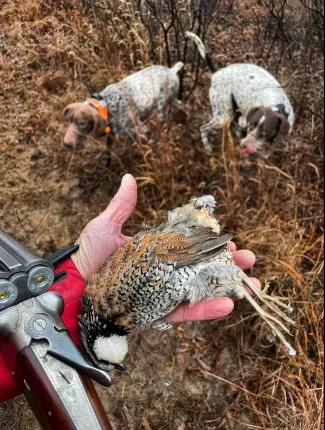
Most hunters initially enter the world of dog ownership for practical reasons. In many disciplines, a dog is not just an asset but an absolute essential. Consider quail hunting. While it is possible to jump-shoot quail, the pace is often too slow for finding birds and too fast when the flush finally happens.
A quail hunter either secures a dog or finds a friend who owns one. Similarly, raccoon hunting without hounds is often a futile exercise, akin to chasing shadows in the dark.
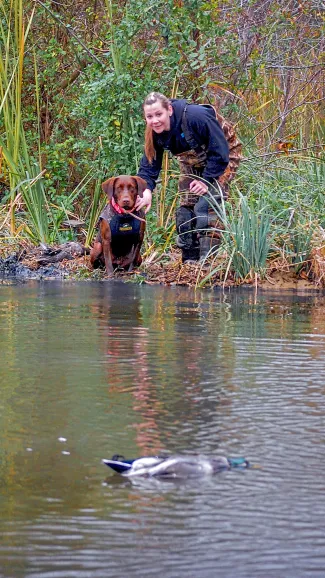
In other arenas, a dog may not be a strict necessity but having one offers a massive advantage. A sturdy retriever saves a hunter from sloshing through icy marshes for a downed mallard or beating through chigger-infested brush for a lost dove. More importantly, a dog ensures fewer crippled birds are lost, putting more game on the table and honoring the animal's harvest. However, the owner soon discovers that a dog is far more than a living game finder. Unlike a set of decoys or a favorite shotgun, a dog is a companion in the field and at home. The canine becomes the focus of the hunt. The hunter's primary satisfaction shifts from the harvest itself to the joy of seeing the dog doing what it does best.
Choosing the Right Breed
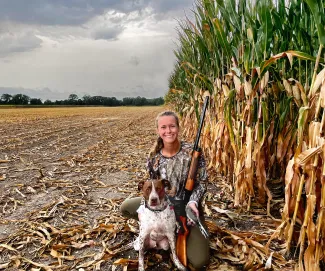
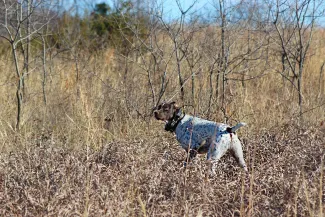
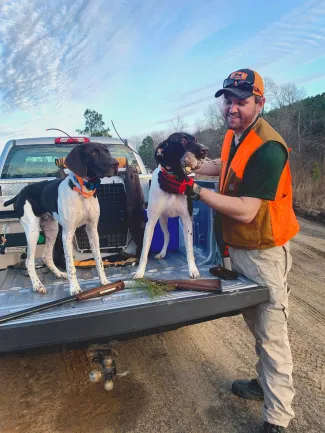
Acquiring a hunting dog represents a significant commitment to a specific sport. Because hunting dogs are bred for specialized instincts, the choice must align with the hunter’s preferred game. If the main interest is quail in open country, a wide-ranging pointer like an English setter is a logical choice. Conversely, in dense cover where a close-working partner is required, a Brittany or German short-haired pointer may be more effective.
While there is overlap between breeds, performance depends heavily on the individual dog and its training. Personal preference for certain temperaments plays a role, but the dog must be suited to the job. One should not expect a basset hound to retrieve a mallard from the center of a lake.
The Path to Training
Once a breed is selected, a hunter wanting a competent four-legged partner faces three paths: buying a fully trained adult; sending a pup to a professional; or training the dog personally.
Professional training is the most expensive route, but it will provide a finished product shaped by expertise. But most hunters choose the do-it-yourself method. This path offers the greatest sense of accomplishment when the dog finally performs as intended.
The training journey begins with proper housing. Many hunting dogs used to be kept in outside kennels, large enough for exercise and equipped with a concrete run for easy cleaning. Shade and a weatherproof doghouse are essentials.
An older school of thought suggested that keeping a dog inside the home ruined its hunting drive. But many modern hunters say that allowing a dog into the home fosters a closer bond, which forms a solid foundation for serious field work.
A balance is probably best, as an outside kennel helps a dog build resistance to the elements it will face during the hunting season. But in recent years, some states and cities (including Oklahoma City) have created ordinances requiring animals to be brought inside or provided with heating.
The law in Oklahoma City says dogs may not be left outside unattended for more than 30 minutes if the temperature is 32 degrees F or lower. An unheated doghouse is considered "outside" in the ordinance. In Tulsa, dogs must be moved to a temperature-controlled space when the temperature is 25 degrees F or below.
The Philosophy of Training
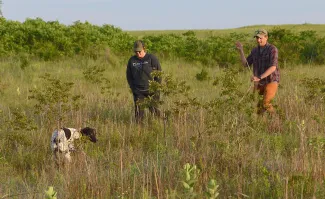
Successful training requires patience, persistence, and an understanding that training is not about creating something from nothing. Instead, it is a routine designed to bring out desirable instincts that the dog already possesses through its lineage.
A trainer does not try to make a pointer out of a Russian wolfhound; rather, they encourage the natural hunting drive the dog was born with.
It is much simpler to stop a dog from doing something unwanted than it is to instill an instinct that is missing. For instance, a young retriever may be so eager that it breaks for the water as soon as a shot is fired. This lack of steadiness can be corrected later. However, if the dog lacks the innate desire to find birds, the trainer faces a much deeper problem.
A novice trainer must avoid the temptation to expect too much too soon. Pushing a young dog too fast can cause it to "stale" and lose its enthusiasm. Training should be fun and appropriately paced for the dog's natural rate of development.
Discipline and Reward
The foundation of a successful hunting partnership is mutual understanding. A trainer must recognize a dog's specific abilities and short-comings. This clarity only comes through close contact, including work, play and simple proximity.
Obedience is the responsibility of the trainer. A well-trained dog obeys its master, while an uncontrolled dog is a burden to the entire hunting party.
Expert hunting dog trainers hold varying views on punishment, generally divided between a "traditional/balanced" philosophy and a modern "force-free" approach.
Historically, hunting dog training often relied on firm discipline to ensure reliability in the field. Many veteran trainers endorse punishment only when a dog understands what is being expected and willfully defies a known command. T
he modern e-collar is often viewed as a more humane replacement for older, harsher methods when it is used sparingly to provide guidance rather than pain.
A growing movement of hunting and gun dog trainers emphasizes that punishment can be counterproductive and damaging to the working relationship. Punishment can create fear, anxiety, and distrust, potentially leading to avoidance behaviors or aggression.
A common expert critique is that punishment only teaches a dog what not to do, whereas positive reinforcement proactively teaches the specific desired behavior.
Despite differences in philosophy, most experts agree on these points:
- Never punish in anger: Discipline delivered out of frustration is considered abusive and ineffective.
- No punishment for coming: Never punish a dog that has just returned to you, as they will associate the punishment with returning.
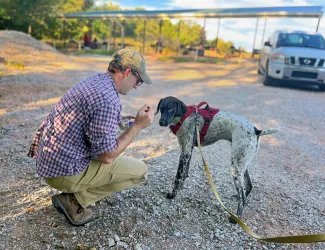
- Praise should be lavish: Reward-based encouragement should always outweigh corrections to keep the dog working cheerfully.
From the Yard to the Field
Repetition is the heartbeat of training. Only through doing the same thing over and over will a dog adopt consistent habits. To avoid boredom, drills should be kept short and varied. If training becomes drudgery, the dog will learn slowly, and the trainer will lose interest.
Once basic control is established, the best classroom is the field itself. Actual hunting experience is where disjointed exercises finally snap into place. The dog discovers that wild birds smell more enticing than pen-raised ones and that a real duck is far more exciting to retrieve than an artificial dummy. In these moments, the hours of effort fade away, and both the hunter and the dog realize exactly what they were meant to do together.
This content originally appeared in the March 1978 issue of Outdoor Oklahoma magazine. View the March 1978 Outdoor Oklahoma issue.