Wildlife managers spend ample time pondering, prepping and, in some cases, planting desirable food and cover to attract mourning doves; however, watering is important too. Unfortunately, not all water sources are created equal when it comes to dove. Thankfully, landowners do have options to boost the appeal of the watering sources on their property if mourning doves are a goal.
Of course, it’s important to note that any watering hole managed for dove will be limited in value and use by the quality of the surrounding habitats on a local scale and the larger landscape. Few doves, if any, will take on a “cross country” trek to drink, except within desert-like areas where water sources may be limited. But if other dove-friendly habitat elements are nearby, a watering hole can make a difference.
For dove, abundant, easy-to-find foods are incredibly important, and a dove’s home range is often defined by the presence and abundance of preferred dove foods. Perches, too, are very important, especially for resting and roosting. By in large, having these elements in close proximity to a good watering hole will increase the likelihood that a water source is used. In addition, dove-friendly watering holes that intersect the flight path of choice feeding grounds and good roosting areas will further increase the attractiveness of a watering hole to dove.
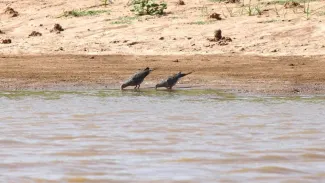
Lakeshores, ponds, water troughs, stock tanks, rivers, creeks, ditches, and puddles can all serve as watering holes for mourning dove. Even heavy dew can help meet the water needs of a thirsty dove. But perhaps the greatest deterrent to a dove searching for a good watering hole is the vegetation surrounding or within the water source. Nothing seems to turn a dove away quicker than the lack of bare ground, which is needed for easy access and good security.
Scattered, short-statured or ground-hugging plants around a water source don’t seem to deter doves too much, but taller, denser vegetation, especially at the water’s edge, is a huge deterrent. Expansive mudflats or even dry soil where dove can land some distance from the water and walk to get a drink is usually the goal to shoot for. Remember, doves are always on the alert for predators, and feeling comfortable and secure within their surroundings is vital, whether they are in search of food or water.
Thanks to Oklahoma’s hot and dry summers, many farm ponds, pit ponds, or wetlands usually provide bare soil for dove by August or September; but not always. When vegetation abounds, clearing the vegetation around a portion of the water source is an option. Grazing, mowing, burning (if feasible), and/or the use of aquatic-approved herbicides are all good practices to help reduce the thick vegetation around a water source, or at least a portion of it. Light discing, too, can also be an option in drier areas near water, but the uneven terrain that usually follows would need to be smoothed out so a gently sloping, flattened bank is present. Remember, bare ground is the general goal, so a layer of thatch or litter after a treatment would need some type of secondary treatment to provide the bare ground that doves are attracted to.
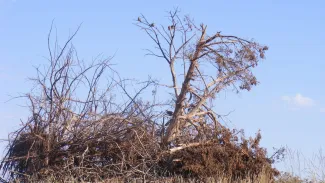
Another consideration for dove-friendly watering holes is to manage for attractive perches around the water source, especially when none are present. Fences, dead trees, tall brush piles, and live trees with relatively open canopies can all be attractive. Tree snags offer excellent dove roosts, and these are easily created through girdling and/or the use of herbicides
So, Oklahoma’s hot summer months offer the perfect opportunity to inspect for and, if necessary, get to work on enhancing a good watering hole for mourning doves. When all three elements come together, including choice feeding grounds, preferred roosting areas, and dove-friendly watering holes, a good dove hunt may be ahead come September.