
Oklahoma is home to an amazing abundance of flora and fauna. From the short-, mixed-, and tallgrass prairies, to the rolling hills and hardwood highlands and valleys, the Sooner State boasts one of the most geographically, botanically, and biologically diverse landscapes in the nation.
But one plant in particular has taken a vicious foothold in every corner, and quite frankly it has worn out its welcome. I’m talking about Juniperus virginiana… the eastern redcedar.
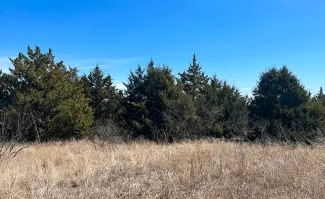
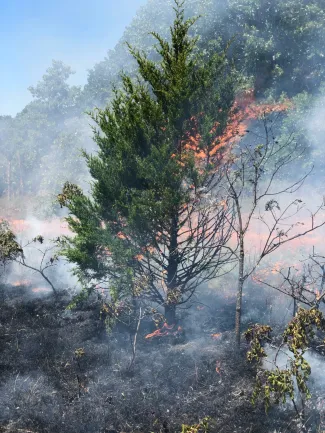
Apart from the human health and safety problems this tree causes (seasonal allergies and a very volatile fuel in wildfires), it serves no real benefit to most of Oklahoma’s wildlife. In fact, these trees have the opposite effect in that they take away from quality habitat.
Take a look across any property that has become inundated by eastern redcedars and consider this – each tree can consume anywhere from 10 to 50 gallons of water PER DAY from that landscape. So, 50 mature trees could equate to a loss of as much as 2,500 gallons EACH DAY. That’s 2,500 gallons that the native grasses and forbs are not getting a share of. That’s 2,500 gallons that those desirable and beneficial hardwood trees are not getting a share of.
Look under those redcedars and notice how barren the ground is. The native forbs and grasses have been literally over-shadowed, robbed of essential sunlight, as well as the water just mentioned. These are the same forbs and grasses that are crucial to wildlife survival. Forbs provide a highly nutritious food source and attract food resources like pollinating insects; native grasses provide for nesting and brooding cover – all very important for many species of birds, especially northern bobwhite quail. Forbs are also a key part of a nutrient-rich diet for deer and other wildlife. We may think of them as “weeds” – while wildlife think of them as “a buffet”.
Removing eastern redcedars is a huge first step in reclaiming quality habitat for a number of wildlife species. When that 2,500 gallons of water is finally able to reach and nourish vital native plants, and when those shaded-out areas are able to catch sunlight, our wildlife have a better and more diverse variety of food and shelter sources.
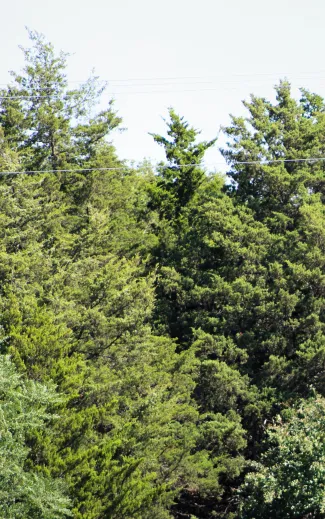
Even better – when redcedars are removed from riparian zones (areas where upland features transition to rivers, streams, or wetlands), those streams that were once thought to be “all dried up” will suddenly begin holding water again. This is the result of those thousands of gallons of water not being intercepted by redcedars.
Landscapes that are dominated by eastern redcedars will show a noticeable reduction in wildlife activity. There simply aren’t adequate food and shelter resources for them. Once the redcedars are brought under control and the native grasses and forbs have returned, there is a generally quick and noticeable response as different wildlife species begin to reoccupy and use the property.
Eastern redcedars spread at an alarming rate, and left untreated, will overwhelm a property and turn it very wildlife “unfriendly”. A single mature female tree (recognizable by the many purple/blue berry-like cones in fall and winter) can produce more than 1 million seeds each year. Male trees are recognizable by the yellow-brown “cones” of pollen that are seen in winter and early spring – these are the allergy agitators. Each mature tree can in turn propagate more than 26 acres, and in just a few decades, what was once a mix of forbs and native grasses becomes a closed-canopy forest.
If you do decide to take on redcedar management on your property – and the overall project seems too daunting at first – focus on removing female trees. This will reduce the number of new seeds and allow for some added time to get in front of the issue. Male trees will still be a source for seasonal allergies and should also be dealt with eventually to further reduce the loss of moisture that’s available to more desired vegetation.
Options for eastern redcedar management include mechanically mulching large areas or cutting individual trees below their lowest living branch. These methods may leave behind some stumps, so use caution when walking or driving the property. A variety of commercially available herbicides will work, with some creating less collateral damage than others, but the most cost-effective and best long-term solution is regularly scheduled prescribed fire.
If you have large populations of eastern redcedars, and would like information on how to deal with them, please reach out to the Oklahoma Department of Wildlife Conservation’s private lands biologist in your region.