White-tailed deer are, without a doubt, the most popular game animal in Oklahoma. And harvest numbers year after year support that claim, with more than 380,000 deer harvested over the last three years.
During the 2024-25 seasons, Oklahoma hit an all-time high for antlerless deer harvest, with 48 percent of deer taken being antlerless. This is great news, as it shows more and more hunters are doing their part to make wise deer management decisions. The Oklahoma Department of Wildlife Conservation strongly encourages the harvest of antlerless deer, as well as giving younger antlered deer the chance to mature and reach their full potential. An interesting fact is that hunters on public land make up only a scratch on the surface of the total deer harvested. Last year, public lands yielded just under 7 percent of the total harvest… however, when you consider public lands make up only about 3 percent of the state’s land area, that’s a noteworthy and impressive statistic.
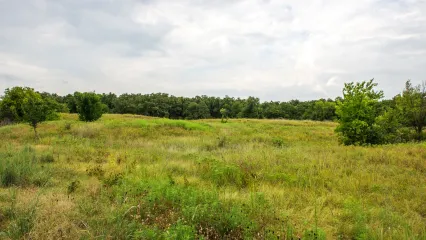
But let’s turn our attention to the other 93 percent of the total harvest, which took place on the other 97 percent of the land area in Oklahoma. Yes, some of it is occupied by metropolitan areas, small cities, and even smaller towns, but it’s easy to see that the overall bulk of the state is rural and privately owned. So, when it comes to the management of wildlife and their habitats, those who own or otherwise occupy those vast areas play a major part. As one of only a few hunters (or, perhaps the only hunter) using a particular piece of private property, the management decisions concerning that deer herd are almost entirely up to you.
A big pro for public land is the fact that the land is managed by someone else. In the case of ODWC property, biologists and technicians implement management plans to ensure there is good habitat and good opportunities for hunters. The downside… you’re one of many hunters using the property, and an increased human presence translates to more challenging hunting conditions.
When it comes to private lands, these pros and cons are flipped; a very select and limited number of folks use the property, but in order to have that quality habitat and quantity of opportunities, it’s up to the landowner or the lessee to do the work on the land and provide for wildlife for the entire year.
No matter the property size, it’s important to make sure there is something there that deer desire – whether it be food, water, shelter, or any combination of those. Some of the more cost-effective means for establishing quality habitat include regular and well-timed prescribed fire, or periodic soil disturbance (either mechanical or natural). It’s even better if you can use both of them in a well-timed and routine rotation.
Timber stand improvements and brush management can expose the understory to more sunlight and promote the growth of forbs, which are a vital part of a healthy deer diet. This scenario provides year-round food resources for deer. However, in order to provide enough forage to carry a deer through the year, several acres of this habitat are required. Depending on quality, as much as two to seven acres of this habitat are required per deer, as each deer can consume between 1,300 and 1,500 pounds of forage annually.
If large-scale work is not an option, landowners or lessees can consider food plots for boosting a herd’s diet, but this is ultimately a short-term, high-input solution to achieve those additional nutritional needs.
Multiple food plots need to be established to offer both warm- and cool-weather options, or single food plots can be rotated with seasonal offerings (although this can leave gaps between termination of one crop and the growth of a second crop). These include warm-season fare like soybeans, cowpeas, clover and alfalfa, and cool-weather options like winter wheat, oats, cereal rye, and even brassicas such as turnips and radishes. These seasonal choices will help cover a deer’s annual nutritional needs on a smaller acreage, but again, require substantially more money and manpower to successfully use.
Establishing a food plot for the purpose of hunting is an effective way to lure deer onto a property or influence deer movement in order to implement harvest management, but it does not address deer food needs for the other four to six months of the year.
In the long run, proper management of native species on more of your acres results in a diversity of native grasses, forbs and beneficial woody plants that are a better and more sustainable year-long enticement that provides both food and cover for deer on your property.
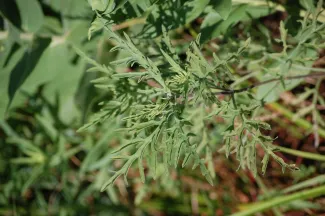
I’ll mention again that timber stand improvements, with the removal of undesirable or unproductive trees (and potentially even thinning the remaining “good” trees), will expose the understory to more sunlight. Ideally, for deer habitat, canopy cover would be 40-60 percent, or 50-70 square feet of basal area per acre. The percentage of canopy cover is often easier to comprehend and can be quickly checked by taking a walk through your woods. Take 100 steps, stopping every 10th step to look directly overhead. At 40-60 percent of canopy cover, four to six of those steps would have an obstructed view of the sky, or four to six of those steps would have a clear view of the sky (i.e. no trees or limbs above you). This will translate to forb growth, which – as part of a natural, native diet – deer find far more enticing than anything a food plot will offer.
And this can be achieved with nothing more than a chainsaw or hatchet, some herbicide, and a little bit of time.
One way to keep track of your efforts and see if they are paying off is to put up a few trail cameras – near sources of food, along travel areas, or near areas where you’ve noticed bedding activity. This can help in keeping tabs on how often deer are using these areas.
So, let’s skip ahead and assume the habitat on your property is good quality, there’s plenty of it, and you are seeing lots of deer. Good deer herd management doesn’t stop when hunting season starts or the equipment is winterized. I’ll stress again that ODWC strongly encourages the harvest of antlerless deer, as it is a crucial part of the herd’s overall health and welfare. It reduces pressure on food sources, as well as maintains a healthy buck-to-doe ratio. And, when able, pass on those younger antlered deer… to give them a chance to reach maturity and add to that healthy buck-to-doe ratio. While a 1:1 sex ratio would be “perfect”, that is a nearly unachievable goal, especially when you likely do not control the entire home range of the local deer herd. A sex ratio of 1:2-3 (one buck to two or three does) is a more achievable goal for most landowners. We can’t cover it here, but there are several resources on our website or from other reliable sources to provide guidance on finding the sex ratio on your property.
Those trail cameras mentioned above can provide some data on your current ratios. Other options include spotlight surveys, or sighting records while you’re out hunting.
If you have granted permission to someone else to hunt the property, make it a point to set up some ground rules. If you want only antlerless deer harvested, or want a certain number of antlerless deer harvested, voice that loud and clear. One antlerless deer harvested for each antlered deer harvested is NOT going to do anything to change your buck-to-doe ratio. Remember, it’s YOUR property, YOU have put in the effort, and the management decisions concerning that deer herd are up to YOU. There are many opportunities out there to use these extra harvested antlerless deer. ODWC’s Hunters Against Hunger or Deer Share programs are AMAZING opportunities to help neighbors or communities while helping you achieve your overall deer management goals.
If you would like more information on how to improve the deer habitat or deer hunting opportunities on your property, reach out to the ODWC private lands biologist in your area.