
Being able to correctly identify fish is an important part of fishing. A responsible angler knows the fishing regulations and understands how many fish of each species can be kept, as well as the size a fish must be before it can be kept.
Knowing how to identify fish helps anglers follow the correct rules and regulations for each species. Different fish may have different limits or size requirements, so proper identification is important for staying within the law.
Anglers can find more information about fish identification, as well as current fishing rules and regulations, in the Oklahoma Fishing & Hunting Regulation Guide. This guide is also available at local license dealers.
Sunfish
Bluegill
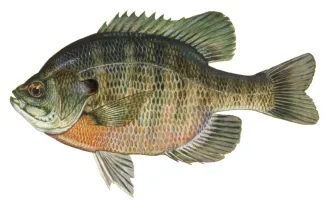
- Typically have vertical bars on the side of their bodies
- Dark gill flap with a black spot at the base of the dorsal fin
Redear Sunfish
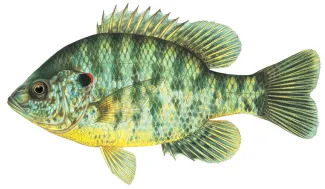
- Red border on its short gill flap
- No black spot at the base of the dorsal fin
Green Sunfish
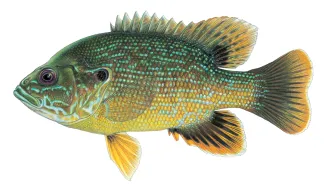
- Large bass-like mouth
- Orange flanked gill flap, with blue-green color lines on cheek
Trout
Rainbow Trout
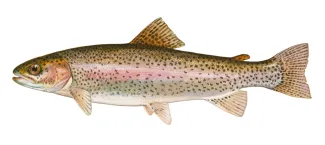
- Black spots on tail
- Iridescence on sides
Brown Trout
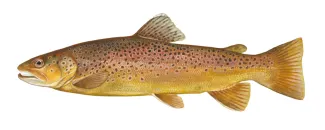
- Few or no black spots on tail
- Orange and red spots on side
Crappie
White Crappie
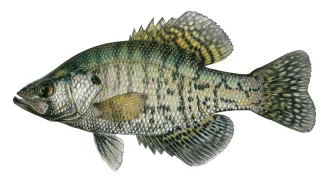
- Distinct vertical bands of blue/gray spots
- 5-6 bony spines in dorsal fin
Black Crappie
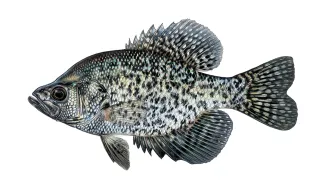
- No true pattern to black spots
- 7-8 bony spines in the dorsal fin.
Catfish
Blue Catfish
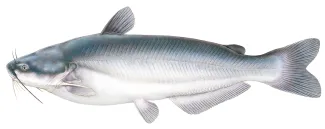
- Straight anal fin
Channel Catfish
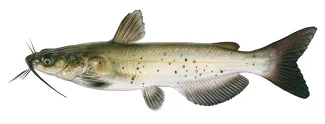
- Curved anal fin
Flathead Catfish
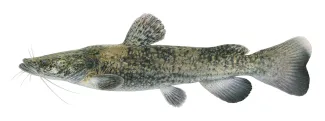
- Tail not forked
Fish can change color depending on the amount of light they receive, and may appear darker or lighter.
Walleye, Sauger & Saugeye
Walleye
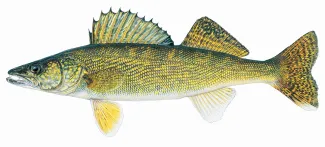
- Few or no cheek scales
- No spots on spiny dorsal fin
Sauger
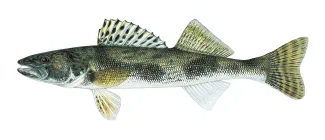
- Cheek covered with scales
- Distinct spots on spiny dorsal fin
- Tan body with distinct brown blotches
Saugeye
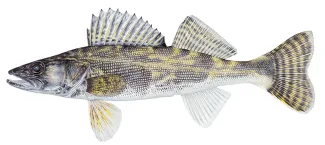
- Cheek covered with scales
- Body gold with distinct brown blotches
- Spiny dorsal fin with distinct spots and bars in webbing
Black Bass
Largemouth Bass
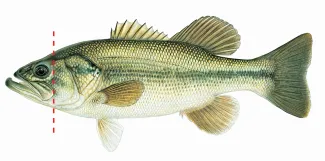
- Mouth hinge well behind eye
Smallmouth Bass
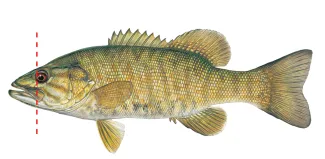
- Mouth hinge in front of eye
Spotted Bass
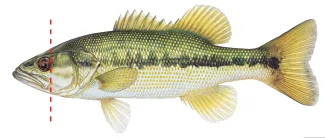
- Mouth hinge even with back edge of eye
Distinguishing Black Bass
The presence or absence of a tooth patch is another way to distinguish black bass. The majority of largemouth bass have no tooth patch on the tongue, while smallmouth and spotted bass do have a tooth patch on the tongue.

Largemouth Bass
Most largemouth bass have no tooth patch on the tongue.

Smallmouth Bass
Smallmouth and spotted bass display a tooth patch on the tongue.
White Bass, Striped Bass and Hybrids
White Bass
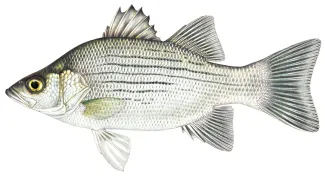
- Arched back
- Faint lines, usually broken
The state fish of Oklahoma is the white bass, also referred to as a sand bass.
Striped Bass
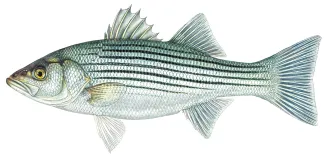
- Back not arched
- Strong, unbroken dark lines
Striped Bass Hybrid
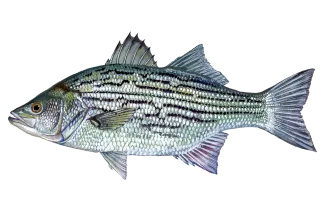
- Back slightly arched
- Some broken lines
Distinguishing White Bass
White bass are also distinguished from striped bass and striped bass hybrids by tooth patches on the tongue. White bass have a single tooth patch, striped bass and striped bass hybrids have two tooth patches.

White Bass
One round or heart-shaped patch on tongue

Striped Bass & Striped Bass Hybrids
Two long patches on tongue
Fish Identification
Oklahoma is home to 176 species of fish. Many of these fish can only be found in specific parts of the state, while others range across the entire state. For additional information on other fish found in Oklahoma check out the “Field Guide to Fishes of Oklahoma.”
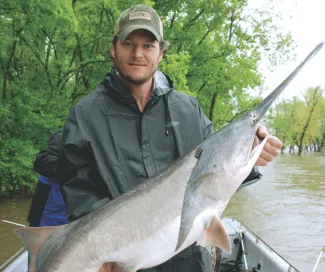
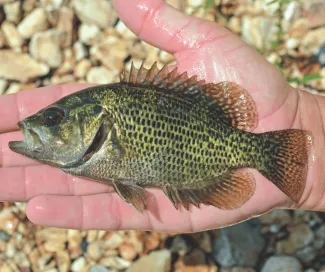
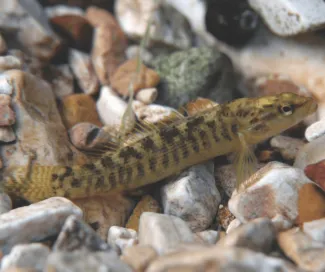
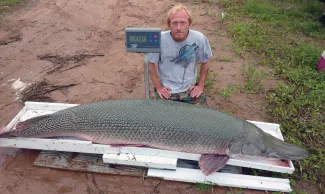
Oklahoma is known for having one of the best paddlefish fisheries in the world!
Species Profiles
Most fishing in Oklahoma takes place in the state’s many reservoirs, lakes, and ponds. However, about one-third of Oklahoma anglers enjoy fishing in the state’s diverse streams each year.
Oklahoma’s streams offer exciting fishing opportunities and are home to many fish species that are not usually found in lakes or reservoirs. The Little River in southeastern Oklahoma alone contains more than 100 different fish species,
which is more than the total number of fish species found in 26 U.S. states.
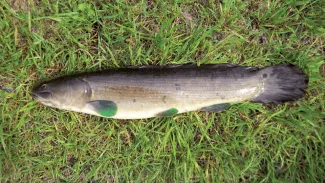
Bowfin are long, snake-like fish found mainly in southeastern Oklahoma. They are sometimes confused with the highly invasive snakehead fish. During the spawning season, male bowfin develop bright neon green colors.
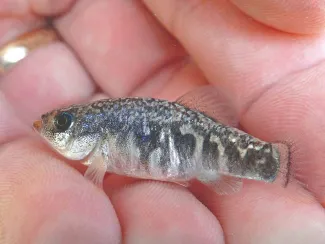
The Red River pupfish is found in southwestern Oklahoma. This species can survive in extreme conditions, including water temperatures over 100°F and salinity levels higher than seawater.
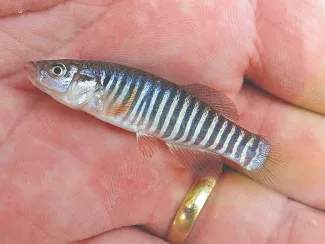
Plains killifish live in western Oklahoma in shallow streams with sandy bottoms. Like the Red River pupfish, they can tolerate very high salinity levels.
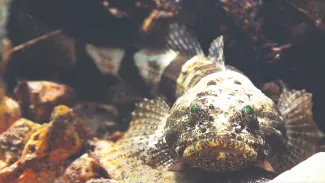
Banded sculpin live in clear, cool streams in the Ozark region of northeastern Oklahoma. They have special green and yellow lenses in their eyes that can retract to protect them from ultraviolet light, similar to wearing sunglasses.
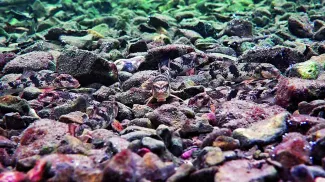
The northern hogsucker is found only in Ozark streams in northeastern Oklahoma. Its camouflage coloring helps it blend in with the stream bottom and avoid predators. Look closely—how many can you find?
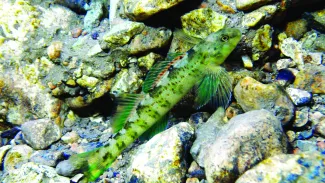
Greenside darters are fairly common in northeastern Oklahoma and are among the state’s most colorful fish. They are sensitive to pollution and need cool, clean, flowing water to survive.
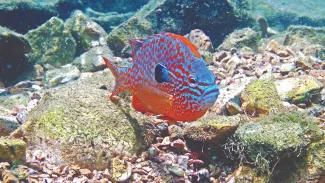
During spawning season, colorful male longear sunfish build nests by making round depressions in the streambed. They aggressively defend these nests from other fish and intruders.
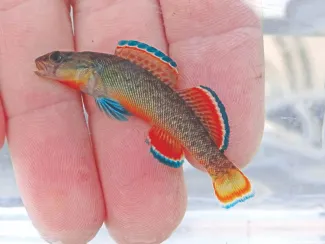
Orangebelly darters are found in southeastern Oklahoma. Like other darter species, they mainly feed on aquatic insect larvae.
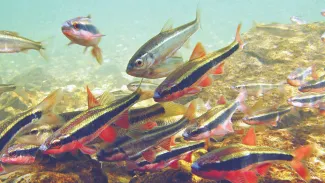
The cardinal shiner is considered a species of greatest conservation need in Oklahoma because it has a very limited range. Both males and females have light blue, powdery spots on their noses.
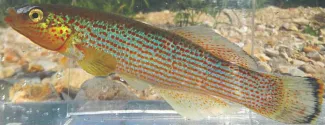
Members of the topminnow family, northern studfish spend most of their time swimming just below the water’s surface. They prefer areas with slower-moving water.
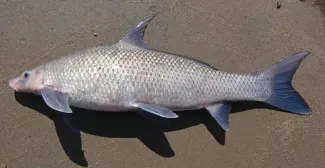
Blue suckers are known as “big river” fish because they are found only in large river systems such as the Red, Arkansas, and Neosho rivers.
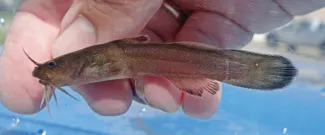
The freckled madtom is a small member of the catfish family and usually grows to about five inches long. These fish spend most of their time hiding under rocks and fallen debris.
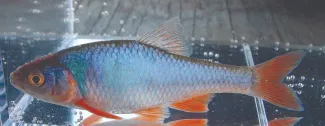
Red shiners are one of the most widespread minnow species in Oklahoma because they can survive in a wide range of environmental conditions.
Back to Beginning Read Next Chapter
This content originally appeared in the Wildlife Department’s "Fishing in the Schools Manual." The full PDF manual can be viewed here.