Habitat Improvement
Good habitat is important for a good fishery. Sometimes habitat improvements must be made to help a certain species in a body of water. Biologists use natural or manmade methods to improve fish habitat.
Brush Piles
Cedar trees are cut down and hauled to a body of water. A cement block is tied to the tree to keep it submerged. Trees are arranged in piles to provide cover for fish. When you see a “Fishing Area” buoy in Oklahoma, it typically means that cedar trees have been sunk in that location. Target species are crappie, sunfish and catfish.
Spider Blocks
This manmade solution can be thought of as an artificial tree. It consists of recycled plastic tubing inserted into cinder blocks and buckets, held in place by cement. Spider blocks are typically arranged in rows. These sites provide cover for all types of fish and are also typically marked with buoys. Target species are crappie, bass, sunfish and catfish.
Law Enforcement
Fishing regulations help conserve the resource for future generations. Game wardens work year-round across the state to make sure anglers are following the regulations. Wardens help protect the resource that we all use. People who follow the regulations benefit most from the work law enforcement does. Always remember that a game warden is your friend, working to protect what you love most about fishing.
The Angler as a Management Tool
One of the best management tools a biologist has is the angler. The angler’s success in a body of water helps tell the biologist that something positive is happening there. Biologists also collect data from anglers by asking them survey questions.
The Wildlife Department has about 85 staff members that manage Oklahoma’s fisheries.
Oklahoma Streams
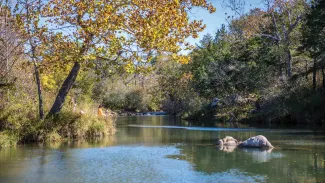
The two major rivers in Oklahoma are the Arkansas and Red rivers. The fishes that you would expect to find in a stream depend largely on what part of Oklahoma the stream is located in. Different regions in Oklahoma support different communities of fishes because of the unique ecosystem of that region. For example, in the Ozark region of northeastern Oklahoma, streams typically have clear, cool, hard water with gravel-bottoms, and are fed by cold springs that help maintain stable flows.
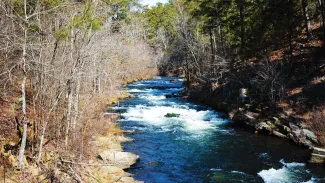
The Leopard Darter is a federally threatened species that calls southeastern Oklahoma home. Streams in central and western Oklahoma typically have braided channels and sandy bottoms. Some are fed by saltwater springs, which can cause them to have higher salinities than seawater! Due to these harsh conditions the fish diversity is much lower in central and western Oklahoma.
Importance of Streams
Streams are home to a wide variety of fish species, but they also provide important habitat for many other animals. These include dragonflies, crayfish, snakes, and turtles, which depend on streams for all or part of their life cycle.
Streams also offer many recreational opportunities for people. Activities such as fishing, floating, snorkeling, swimming, and wildlife viewing all take place in and around Oklahoma’s streams. In addition, streams play an important role in the environment by moving sediment and nutrients downstream and onto floodplains.
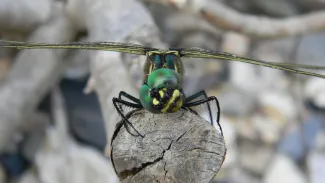
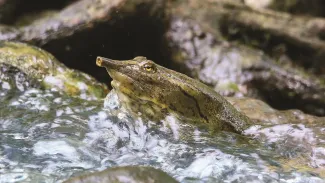
People rely on larger streams to supply water for homes, businesses, and agriculture. Because of this, it is important to maintain high water quality in Oklahoma’s streams. Streams can also serve as transportation routes and provide hydropower that generates electricity.
Stream Fisheries in Oklahoma
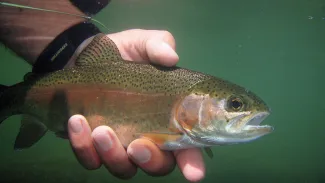
The lower Illinois River and the lower Mountain Fork River are year-round trout fisheries. These fisheries are supported by regular stocking of non-native rainbow and brown trout.
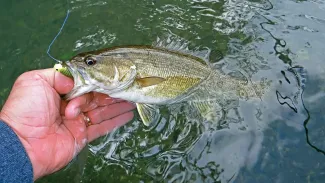
Smallmouth bass are highly valued in eastern Oklahoma streams because they are known as one of the hardest-fighting freshwater fish. Popular destinations for smallmouth bass anglers include the upper Illinois River and the Barren Fork River.
Striped bass are prized for their strength and large size, with some fish weighing more than 40 pounds. Anglers often target striped bass in flowing water below dams, such as those at Eufaula, Tenkiller, and Keystone lakes.
Other fish species that provide excellent fishing opportunities in Oklahoma streams include walleye, sauger, channel catfish, blue catfish, and white bass.
Problems Facing Streams
Freshwater ecosystems are losing species at a much faster rate than land ecosystems. Many of these losses are caused by changes to stream habitats and water flow.
Across the United States, major changes to streams began in the mid-1800s. Dams were built, channels were dredged or straightened, and poor land-use practices damaged streambanks. These actions caused erosion and made stream habitats less stable. Pollution has also been a problem. Some areas of Oklahoma are still recovering from contamination caused by improper mining practices.
Another major issue is the introduction of non-native species. The effects of these species are often unpredictable, but once they become established, they can harm native plants and animals.
Care for Your Streams!
One of the easiest ways to protect streams is to keep plants growing along streambanks. These plants provide many benefits to the stream environment. They help filter extra nutrients from runoff, provide shelter for fish, and offer shade that keeps water temperatures cooler.
Plant roots also help prevent erosion by holding soil in place along the streambank. When visiting streams, always pick up your trash so others can enjoy the area. Every stream visitor should aim to leave no trace and help protect these valuable ecosystems for the future.
America is home to large numbers and varieties of wild creatures. Yet, only a few decades ago, wildlife’s survival was very much in doubt. Early settlers harvested an abundance of wildlife, wiping out some species and reducing others to just a fraction of their original numbers.
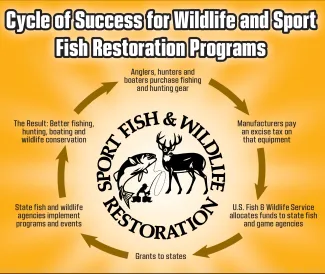
Because of this, Congress passed the act known as the Dingell-Johnson (DJ) Act on Aug. 9, 1950. Previously an act known as the Pittman-Robertson Act was passed in 1937. Together, these acts are administered through the Office of Conservation Investment (OCI).
Since then, numerous species have rebuilt their populations and extended their ranges far beyond what they were in the 1930s.
Federal funding from OCI pays for up to 75 percent of project costs, with the Oklahoma Department of Wildlife Conservation paying at least 25 percent. Shooting ranges are funded at the rate of 90 percent federal and 10 percent state. License sales and other income lets the Wildlife Department make a lasting impact on species populations. The Department receives about $28 million each year from federal excise taxes for sport fish and wildlife restoration.
OCI has greatly aided in a nationwide effort to enlist science in the cause of wildlife conservation. About 26 percent of OCI funding to the states is used for surveys and research.
Surveys provide solid information on the numbers and activities of species, which helps biologists make management decisions. This includes season dates, bag limits, habitat improvements, etc.
Research findings have enabled managers to keep wildlife in balance with their environments and to permit more people to enjoy the wildlife without endangering the future of any species.
Aquatic Education is designed to make each angler aware of how his or her behavior affects others and the resource. It also helps introduce new anglers to the sport of fishing by teaching the basic knowledge an angler needs.
This content originally appeared in the Wildlife Department’s "Fishing in the Schools Manual." The full PDF manual can be viewed here.